



Open Cell vs Closed Cell Spray Foam Insulation: Complete Comparison Guide (2026)
|
✅ Quick Answer: Open Cell vs Closed Cell Spray Foam Closed-cell foam: R-6.0–6.5/inch, rigid, moisture-resistant, vapor barrier — best for basements, crawl spaces, exterior walls, cold climates. Open-cell foam: R-3.5–3.7/inch, soft/flexible, better sound dampening, lower cost — best for interior walls, attics, warm climates. Which is better? Closed-cell for moisture control and maximum thermal performance. Open-cell for sound absorption and budget-sensitive interior projects. Cost: Open-cell ~$0.25–$0.50/board ft; Closed-cell ~$1.00–$2.00/board ft (2× to 4× more expensive, but higher R-value per inch). |
Open cell and closed cell spray foam are both polyurethane-based insulation materials that expand on application — but their internal cell structure creates fundamentally different performance profiles. The choice between them affects thermal resistance, moisture control, structural strength, sound dampening, and total project cost. This guide explains every key difference with specific data so you can choose the right type for your application.
What Is the Difference Between Open Cell and Closed Cell Spray Foam?
The fundamental difference between open cell and closed cell spray foam is the structure of the polyurethane cells after curing.
Open-cell foam: The cells break open during expansion, leaving an interconnected matrix of air pockets. The result is a soft, sponge-like material that is permeable to air and vapor. R-value: approximately R-3.5 to R-3.7 per inch.
Closed-cell foam: The cells remain intact and sealed, filled with low-conductivity gas (typically hydrofluorocarbon or carbon dioxide). The result is a rigid, dense material that resists both air and moisture. R-value: approximately R-6.0 to R-6.5 per inch.
|
Property |
Open-Cell Foam |
Closed-Cell Foam |
|
R-value per inch |
R-3.5 to R-3.7 |
R-6.0 to R-6.5 |
|
Density |
0.5 lb/cu ft (soft) |
2.0 lb/cu ft (rigid) |
|
Cell structure |
Open / interconnected |
Closed / sealed |
|
Air barrier |
✅ Yes (at sufficient depth) |
✅ Yes |
|
Vapor barrier |
❌ No |
✅ Yes (at 2" depth) |
|
Water resistance |
Absorbs moisture |
Highly water-resistant |
|
Sound dampening (STC) |
Higher (absorbs sound) |
Lower than open-cell |
|
Structural reinforcement |
Minimal |
Adds rigidity to walls |
|
Material cost per board ft |
$0.25–$0.50 |
$1.00–$2.00 |
|
Best climate |
Warm / mixed |
Cold / mixed-humid |
|
Typical applications |
Interior walls, attics |
Basements, crawl spaces, exterior walls, roofs |
Open-Cell Spray Foam Insulation: Advantages, Disadvantages & Best Uses
What Is Open-Cell Spray Foam?
Open-cell spray foam is a low-density polyurethane foam (approximately 0.5 lb per cubic foot) in which the gas-filled cells break open during curing. The resulting material is soft, flexible, and breathable. It expands aggressively — up to 100× its liquid volume — making it effective at filling irregular cavities and hard-to-reach voids.
Advantages of Open-Cell Foam
• Higher expansion ratio: Expands up to 100× its volume (vs 30–60× for closed-cell), providing superior coverage in irregular spaces and stud cavities
• Better sound attenuation: Open, interconnected cells absorb sound waves more effectively — STC ratings 5–10 points higher than closed-cell of the same thickness
• Lower material cost: At $0.25–$0.50 per board foot, open-cell foam typically costs 50–75% less than closed-cell for the same volume
• Breathable wall assemblies: Allows walls to dry inward in climates where this is desirable, reducing condensation risk in some assemblies
• Self-leveling performance: Soft texture makes it easy to trim flush with studs after curing with minimal waste
Disadvantages of Open-Cell Foam
• No vapor barrier: Permeable to moisture vapor — requires a separate vapor retarder in cold climates or humid applications to prevent condensation within wall assemblies
• Lower R-value per inch: R-3.5–3.7/inch requires 11 inches to reach R-38 (attic target for most US zones) vs 6 inches for closed-cell
• Moisture absorption: Can absorb liquid water in flood or high-humidity scenarios — unsuitable for below-grade applications
• No structural benefit: Does not add meaningful rigidity to wall assemblies
Best Applications for Open-Cell Foam
Open-cell foam is the right choice when: (1) budget is a primary constraint on interior projects; (2) sound dampening between rooms is a goal; (3) the application is above-grade in a climate with dry winters or the wall assembly has a designed drying path; (4) access to small or irregular cavities requires maximum expansion.
|
Application Area |
Open-Cell Suitable? |
Notes |
|
Interior walls (above grade) |
✅ Recommended |
Excellent sound control; cost-effective |
|
Attic floor (hot climate) |
✅ Recommended |
Allow drying; do not use on roof deck |
|
Attic roof deck (hot climate) |
⚠️ With caution |
Verify moisture management for your climate zone |
|
Basement walls |
❌ Not recommended |
Moisture absorption risk; use closed-cell |
|
Crawl space walls |
❌ Not recommended |
Ground moisture contact — use closed-cell |
|
Below-grade slab |
❌ Not recommended |
Open structure holds water |
|
Rim joists |
⚠️ Acceptable |
Closed-cell preferred for moisture resistance |
|
Exterior sheathing |
❌ Not recommended |
No vapor resistance; use closed-cell |
Closed-Cell Spray Foam Insulation: Advantages, Disadvantages & Best Uses
What Is Closed-Cell Spray Foam?
Closed-cell spray foam is a high-density polyurethane foam (approximately 2.0 lb per cubic foot) in which the gas-filled cells remain sealed after curing. The low-conductivity blowing agent trapped inside the cells — combined with the sealed structure — is responsible for its exceptional R-value. The cured foam is rigid, dimensionally stable, and highly resistant to moisture.
Advantages of Closed-Cell Foam
• Highest R-value per inch available: R-6.0–6.5/inch is the highest thermal resistance of any commercially available insulation material, including fiberglass, mineral wool, cellulose, and open-cell foam
• Class II vapor retarder: At 2+ inches of thickness, closed-cell foam achieves vapor permeance below 1 perm, meeting IRC Class II vapor retarder requirements without additional sheeting
• Air and moisture barrier in one: Simultaneously seals air infiltration and controls vapor diffusion — two functions that typically require separate products
• Structural reinforcement: Closed-cell foam increases racking resistance of wall assemblies. Studies have shown 2" of closed-cell foam increases wall panel rigidity by 200–300%
• Mold and pest resistance: Inert polymer with no organic content — provides no food source for mold or insects
• Water intrusion resistance: Closed cells shed liquid water, making it the only suitable spray foam for below-grade, coastal, and flood-prone applications
• Lifespan: Properly installed closed-cell foam lasts the life of the structure — no settling, degradation, or re-treatment required
Disadvantages of Closed-Cell Foam
• Higher material cost: $1.00–$2.00 per board foot — 2–4× more expensive than open-cell foam by volume
• Lower sound attenuation: Rigid closed cells reflect rather than absorb sound — STC performance inferior to open-cell at comparable thicknesses
• Lower expansion ratio: Expands 30–60× (vs 100× for open-cell) — may require multiple passes in deep cavities
• HFC blowing agents: Traditional closed-cell formulas use hydrofluorocarbons with significant global warming potential, though next-generation HFO-blown products are increasingly available (lower GWP)
Best Applications for Closed-Cell Foam
Closed-cell foam is required or strongly preferred when: moisture resistance is critical; maximum R-value in a shallow cavity is needed; the application is below grade; the building envelope needs structural reinforcement; or vapor management requirements cannot be met by open-cell foam alone.
|
Application Area |
Closed-Cell Suitable? |
Notes |
|
Basement walls |
✅ Strongly recommended |
Water-resistant; vapor barrier; structural |
|
Crawl space walls/floor |
✅ Strongly recommended |
Prevents ground moisture entry |
|
Rim joists |
✅ Recommended |
Best ROI application — seals major air leakage point |
|
Exterior walls (cold climate) |
✅ Recommended |
Vapor management and high R-value per inch |
|
Roof deck (unvented attic) |
✅ Recommended |
Class II vapor retarder eliminates need for roof venting |
|
Metal building walls |
✅ Recommended |
Controls condensation on metal framing |
|
Interior walls (above grade) |
⚠️ Overkill (cost) |
Open-cell typically sufficient and more cost-effective |
|
Below-grade slab edge |
✅ Recommended |
Resists ground contact moisture |

Open Cell or Closed Cell Spray Foam: Which Is Better for Your Project?
Neither foam type is universally 'better' — the correct choice depends entirely on the application, climate zone, and project goals. The following decision framework addresses the most common scenarios:
|
Scenario / Priority |
Best Choice |
Reason |
|
Cold climate (Zone 5–8) |
Closed-cell |
Vapor barrier required; high R-value per inch critical |
|
Hot/humid climate (Zone 1–3) |
Open-cell |
Breathability reduces moisture trapping; cost-effective |
|
Mixed climate (Zone 4) |
Closed-cell for exterior; open-cell for interior |
Hybrid approach optimizes performance and cost |
|
Basement or crawl space |
Closed-cell |
Moisture contact risk eliminates open-cell as an option |
|
Sound control between rooms |
Open-cell |
4× better sound absorption at comparable cost |
|
Maximum R-value in shallow cavity |
Closed-cell |
R-6.5/inch vs R-3.7 — critical when cavity depth is limited |
|
Budget-limited interior project |
Open-cell |
50–75% lower material cost for above-grade applications |
|
Structural reinforcement needed |
Closed-cell |
Adds 200–300% racking resistance to wall panels |
|
Below-grade or flood-prone area |
Closed-cell |
Only option — open-cell absorbs liquid water |
|
Unvented (hot roof) attic |
Closed-cell |
Class II vapor retarder eliminates need for separate membrane |
|
💡 When to Use Both Foam Types in the Same Project A common strategy: apply 2" of closed-cell foam to the interior face of exterior walls (achieving vapor barrier + R-13), then fill the remaining cavity with open-cell foam for additional R-value and sound control. This hybrid approach is recognized by the IRC as a code-compliant vapor management strategy in cold climates and provides the sound benefits of open-cell at a lower total cost than full closed-cell. |
Open Cell vs Closed Cell Spray Foam Cost Comparison
Spray foam cost is typically quoted per board foot (1 sq ft at 1 inch of thickness). Here are realistic 2026 material and installed costs:
|
Cost Type |
Open-Cell Foam |
Closed-Cell Foam |
Notes |
|
Material cost (DIY cans/kits) |
$0.25–$0.50/bd ft |
$1.00–$2.00/bd ft |
Closed-cell = 2–4× more expensive |
|
Professional installed cost |
$0.44–$0.65/bd ft |
$1.00–$1.50/bd ft |
Labor similar; material drives cost |
|
2,000 sq ft attic to R-38 |
~$2,200–$4,000 |
~$5,500–$10,000 |
Open-cell: 10.5"; closed-cell: 6" |
|
Typical rim joist (1,500 sq ft) |
~$300–$600 |
~$600–$1,200 |
2–3" depth; both are DIY-accessible |
|
Basement walls (1,200 sq ft) |
Not recommended |
~$2,400–$5,000 |
Closed-cell required for moisture control |
For most DIY applications — gap sealing, rim joists, and small wall sections — closed-cell spray foam cans (such as Kraken Bond FastCoat) provide the most practical format. One 27.1 oz can covers approximately 25 board feet at 1" depth and delivers Class A fire-rated performance.
R-Value Comparison: How Thick Do You Need Each Foam Type?
R-value determines how much insulation depth is required to meet building code requirements in your climate zone. Because closed-cell foam has nearly double the R-value per inch, it requires significantly less material thickness to reach the same thermal resistance target:
|
Target R-Value |
Open-Cell Thickness Needed |
Closed-Cell Thickness Needed |
Application |
|
R-13 (min walls, warm climates) |
3.5 inches |
2.0 inches |
Exterior walls, Zone 1–3 |
|
R-20 (enhanced walls) |
5.5 inches |
3.1 inches |
Exterior walls, Zone 4–5 |
|
R-30 (ceiling minimum, Zone 1–2) |
8.1 inches |
4.6 inches |
Cathedral ceiling |
|
R-38 (attic, Zone 3–4) |
10.3 inches |
5.8 inches |
Attic floor or roof deck |
|
R-49 (attic, Zone 5–8) |
13.2 inches |
7.5 inches |
Cold climate attic |
|
R-60 (very cold climate attic) |
16.2 inches |
9.2 inches |
Zone 7–8 attic |
For cavities with limited depth — steel stud walls (3.5"), shallow roof rafters, basement sill plates — closed-cell foam is often the only way to achieve code-compliant R-values without furring out the wall assembly.
Open Cell vs Closed Cell Foam for Soundproofing
Sound performance is one of the clearest advantages of open-cell over closed-cell foam. Here's why:
Open-cell foam: The interconnected porous structure absorbs sound energy as air moves through the cells. It achieves STC (Sound Transmission Class) ratings of 37–39 in a standard 2×4 stud wall filled to 3.5 inches. This represents approximately 60–70% reduction in sound transmission compared to an uninsulated wall.
Closed-cell foam: Rigid closed cells reflect sound rather than absorb it. An identical wall assembly filled with closed-cell foam achieves STC 33–35 — measurably inferior to open-cell for sound control applications.
For home theaters, bedrooms, podcast studios, or partition walls between living spaces, open-cell spray foam consistently outperforms closed-cell. For exterior walls where thermal and moisture performance are the priority, the STC difference is a secondary consideration.
Moisture and Vapor Control: Open Cell vs Closed Cell
Vapor management is the most critical technical distinction between the two foam types — and the most common source of building failures when the wrong type is chosen.
Vapor permeance (perms): Open-cell foam at 3.5" has a vapor permeance of approximately 10–16 perms (permeable — Class III vapor retarder or none). Closed-cell foam at 2" achieves 0.8–1.0 perms (Class II vapor retarder). The IRC requires Class II or better in Climate Zones 5–8 for above-grade walls.
|
⚠️ Critical Moisture Risk: Do Not Use Open-Cell Foam Below Grade Open-cell foam's interconnected pore structure absorbs liquid water. In basement walls, crawl spaces, below-grade slab edges, or any application with potential liquid water contact, open-cell foam will retain moisture and promote mold growth. The International Residential Code (IRC) Section R702.7 specifically requires vapor retarders in cold and mixed-humid climate zones — a requirement open-cell foam cannot meet at practical depths. ALWAYS use closed-cell foam for: basements · crawl spaces · below-grade applications · flood-prone areas · coastal construction. |
In hot, humid climates (Climate Zones 1–2), the moisture management strategy actually reverses: walls may need to dry toward the exterior, and a highly permeable open-cell foam on the interior can be the correct approach. The 'right' vapor management strategy is climate-specific — always consult local code requirements and a building science professional for below-grade applications.
DIY Application: Which Type Is Easier to Install?
Both foam types are available in consumer-format spray cans and two-component kits for DIY installation. The application mechanics are similar, but there are important differences:
|
Factor |
Open-Cell (DIY) |
Closed-Cell (DIY) |
|
Consumer can format |
Available |
Available (Kraken Bond FastCoat and similar) |
|
Expansion ratio |
Very high — harder to control fill depth |
Moderate — easier to control fill depth |
|
Trimming after cure |
Soft — trims easily with serrated knife |
Rigid — requires saw or oscillating tool |
|
Application temperature |
50°F–90°F optimal |
50°F–90°F optimal |
|
Ventilation required |
Yes — MDI off-gassing |
Yes — MDI off-gassing |
|
Cure time to trim |
~15 min (tack-free); full cure ~24 hr |
~30 min (tack-free); full cure ~24 hr |
|
Safety equipment |
Gloves, glasses, N95 respirator |
Gloves, glasses, N95 respirator |
For common DIY applications — rim joists, basement sill plates, window and door gaps, utility penetrations — Kraken Bond's FastCoat closed-cell spray foam is the professional choice. Its Class A fire rating, R-6 per inch performance, and controlled expansion make it the most practical format for targeted residential applications without requiring professional equipment.
Frequently Asked Questions: Open Cell vs Closed Cell Spray Foam
What is the main difference between open cell and closed cell spray foam?
The main difference is cell structure: open-cell foam has broken cells filled with air, making it soft, breathable, and vapor-permeable (R-3.7/inch). Closed-cell foam has intact sealed cells filled with low-conductivity gas, making it rigid, moisture-resistant, and a vapor barrier (R-6.5/inch). This structural difference drives all other performance distinctions — thermal resistance, moisture control, sound dampening, and cost.
Is open cell or closed cell spray foam better for walls?
For exterior walls in cold climates (Zone 5–8): closed-cell is better — it serves as both insulation and vapor retarder in a single product. For interior partition walls where sound control matters: open-cell is better — it absorbs sound more effectively and costs significantly less. For exterior walls in warm climates (Zone 1–3): open-cell is often sufficient and more cost-effective.
Which spray foam has a higher R-value, open cell or closed cell?
Closed-cell spray foam has a higher R-value: R-6.0 to R-6.5 per inch. Open-cell spray foam achieves R-3.5 to R-3.7 per inch. Closed-cell delivers approximately 75% more thermal resistance per inch, which means significantly less material thickness is needed to meet the same R-value target — particularly important in shallow cavities.
Can open cell spray foam be used in a basement?
No — open-cell spray foam should not be used on basement walls or other below-grade applications. Its interconnected pore structure absorbs liquid water, which leads to moisture retention and mold growth. Closed-cell spray foam is required for basements, crawl spaces, and any surface with potential liquid water contact.
Is closed cell spray foam worth the extra cost?
Yes, in applications where moisture control, high R-value per inch, or structural reinforcement is needed. For basement walls: closed-cell pays for itself by preventing moisture damage. For rim joists: a $50 can of closed-cell foam can save $100–$200/year in heating costs in cold climates, with payback under 6 months. For interior partition walls: open-cell foam typically provides adequate performance at 50–75% lower cost.
Does open cell spray foam absorb water?
Yes. Open-cell foam's interconnected pore structure allows liquid water to penetrate and be retained. This makes it unsuitable for below-grade applications, crawl spaces, areas with potential flooding or plumbing leaks, and any surface that may be exposed to liquid water. Closed-cell foam's sealed cell structure is highly water-resistant.
What is the difference between open cell and closed cell foam for soundproofing?
Open-cell foam significantly outperforms closed-cell for soundproofing. At 3.5" in a standard stud wall, open-cell foam achieves STC 37–39 vs STC 33–35 for closed-cell. The interconnected porous structure of open-cell foam absorbs acoustic energy rather than reflecting it. For sound control between rooms, open-cell is the preferred choice regardless of climate zone.
What is the difference between expanding foam and spray foam insulation?
All spray foam insulation is expanding foam, but not all expanding foam products are spray foam insulation. The term 'spray foam insulation' refers to two-component polyurethane systems (open-cell or closed-cell) applied professionally or via DIY kits. Single-component 'expanding foam sealants' (can foam for gaps and cracks) are also polyurethane-based but formulated for sealing rather than broad insulation applications. They have lower R-values and are typically used for air sealing at penetrations.
Which spray foam is better for an attic?
It depends on the attic type. For a vented attic (insulation on the attic floor): open-cell foam or blown-in insulation are both cost-effective. For an unvented 'hot roof' attic (insulation at the roof deck): closed-cell foam is required — it acts as a Class II vapor retarder, allowing the roof assembly to remain unvented per IRC Section R806.5. In cold climates, applying closed-cell foam to the roof deck eliminates the need for attic ventilation.
Can you mix open cell and closed cell spray foam in the same wall?
Yes, and this hybrid approach is code-recognized in cold climates. A common method: apply 2 inches of closed-cell foam (achieving R-13 and a Class II vapor retarder) to the interior face of exterior sheathing, then fill the remaining cavity with open-cell foam for additional R-value. The IRC recognizes this as a compliant vapor control strategy when the closed-cell layer provides sufficient vapor resistance for the climate zone.
1 comment
 Back to Spray Foam Insulation Blog

)



Author : Krakenbond Team
Let customers speak for us

Great product, easy to use.
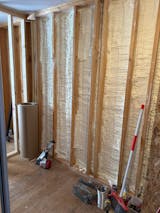
we used it in our new bathroom. Easy to use works well!
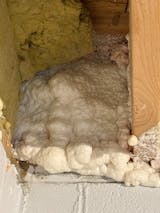
I used the Kraken FastCoat Fire Rated spray foam insulation to seal rim joists in our basement.
The kit ordered came with everything I needed to get started. The spray foam, cleaner, and gun. Application was seamless. Following the directions provided, it foam went on evenly and adhered to not only the wood in the joists, but also the metal ducts present in some of the joist bays.
I was actually pretty impressed with it, which is saying a lot for me. The application I used it for, sealing joist bays to be air tight, worked extremely well. Ordering another case of it to use to air seal my attic.
Used it to insulate crawl space beneath the sun room. Excellent. Easy to use. No mess. Just wish there were more in the bottles.
When remodeling an existing full foam cavity fill project. This product is a geart solution for replacing areas of the existing that had to be removed during the remodel especialy when it isn't cost effective to have a commercial spray foam contractor out for touchup. Make sure to have enough cans to get it done. Touching up a 2' area of a full fill 2x10 floor joist will take about 1½ cans.

Great product! Easy to use and hoping it will last a long time. Great service and delivery experience for me.

Great fast option for repairs
great product
Definitely a learning curve in use, but over all great product.
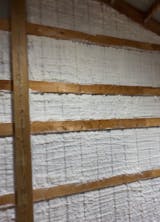
Works great, easy to use and apply. Cans and cleaner very user friendly! tays warmer than previously!
Very easy to use and awesome product. Works very well and no complaints. Used it at home but would def use it at work if the company allowed but they have their own sources.
Easy to apply. Applied a 48 pack to my metal shed in less than an hour.
Great coverage and easy to use!
Was clean installation and delivered as much per ft. as advertised. Im placing another order. Full disclosure, I havent tried other brands, but I was happy. The cleaner works really well as well! I did a 2ft. Swath all the way around the base of my 40x48 shed with 24 cans.
Easy to use, a fraction of the price for professional results, definitely recommend




Which spray foam is best to use to prevent pest entry (mice, roaches, bees) from entering my townhouse if my neighbors have pests? I hear spray foam can do this even if the next townhouse is vacant. Baltimore, Maryland thanks you for your reply.
Leave a comment