



Spray Foam Floor Insulation: DIY Guide for Underfloor, Joists & Between Floors (2026)
|
✅ Quick Answer: How to Insulate Floors with Spray Foam Spray foam floor insulation works by applying expanding polyurethane foam to the underside of floor assemblies — crawl space ceilings, floor joists, and rim joists. Here is the short version: 1. Prep: Clean the surface, ensure moisture levels below 19%, turn off HVAC, wear PPE 2. Air seal first: Fill gaps around pipes, wires, and rim joists with spray foam 3. Apply foam: Spray 2–3 inches of closed-cell foam between and over floor joists 4. Check depth with a depth gauge — target R-19 to R-30 depending on climate zone 5. Allow 30 min cure before trimming; full cure in 24 hours Best foam type: Closed-cell (R-6/inch, vapor barrier, moisture-resistant) Cost: $1.00–$2.00/board ft material; $1,500–$5,000 installed for a 1,000 sq ft crawl space DIY-friendly: Yes, with cans for small areas; two-component kits for larger projects |
Spray foam floor insulation is one of the highest-ROI home improvement projects available. The Department of Energy estimates floors account for 10–20% of whole-house heat loss in homes over crawl spaces or unheated basements — and spray foam addresses both thermal resistance and air infiltration in a single application. This guide covers every floor type: crawl space and underfloor, floor joists, between stories, subfloor, and concrete slab.

What Does Floor Insulation Do and Is It Worth It?
Floor insulation creates a thermal boundary between conditioned living space and unconditioned space below (crawl space, unheated basement, or open air). It serves four functions simultaneously:
• Thermal resistance: Reduces heat loss through the floor assembly in winter and heat gain in summer. Without insulation, a suspended floor over a vented crawl space can lose 10–20% of a home's total heating energy.
• Air sealing: Spray foam — unlike batts — also seals air infiltration pathways. Gaps around pipes, wires, and joists allow cold air and moisture vapor into the living space. Spray foam fills these simultaneously.
• Moisture control: Closed-cell spray foam acts as a Class II vapor retarder, preventing ground moisture from migrating into the floor assembly where it promotes mold and wood rot.
• Comfort: Insulated floors eliminate cold floor surfaces, drafts at floor level, and temperature stratification — the 10°F+ difference between ankle and head height in uninsulated homes.
|
Project |
Annual Energy Savings Est. |
DIY Material Cost |
Payback Period |
|
Crawl space floor joists (R-19) |
$150–$400/year |
$600–$1,500 |
2–5 years |
|
Rim joists only (air sealing) |
$100–$300/year |
$100–$300 |
6–18 months |
|
Basement ceiling (unheated) |
$100–$250/year |
$400–$1,000 |
2–4 years |
|
Between floors (sound only) |
Sound benefit |
$300–$800 |
N/A — comfort |
Spray Foam vs Other Floor Insulation Types: Which Is Best?
Several insulation types are used in floor assemblies. Spray foam consistently outperforms alternatives in air sealing and moisture resistance, but the right choice depends on your specific floor type:
|
Insulation Type |
R-Value/inch |
Air Seal |
Vapor Barrier |
DIY-Friendly |
Best For |
|
Closed-cell spray foam |
R-6.0–6.5 |
✅ Yes |
✅ Yes (2"+) |
Yes (cans/kits) |
Crawl spaces, joists, basements |
|
Open-cell spray foam |
R-3.5–3.7 |
✅ Yes |
❌ No |
Yes (kits) |
Above-grade interior floors, sound |
|
Fiberglass batts |
R-2.9–3.8 |
❌ No |
❌ No |
Yes |
Floor joists (secondary to spray foam) |
|
Rigid foam board |
R-3.8–6.5 |
Partial |
Partial |
Yes |
Basement slab, slab-on-grade |
|
Blown-in cellulose |
R-3.2–3.8 |
Partial |
❌ No |
Rental equipment |
Accessible attic-style floor cavities |
Spray foam is the only floor insulation that simultaneously addresses thermal resistance, air infiltration, and moisture vapour in a single product. For crawl spaces and floor joists in cold or mixed climates, it is the professional choice and increasingly the DIY choice as consumer-format products have become widely available.
How to Insulate Under a Floor with Spray Foam (Crawl Space & Underfloor)
The most common floor insulation application is spraying the underside of floor joists from a crawl space or unheated basement. This is the primary scenario for 'spray foam under floor' searches and the application where spray foam delivers the best return on investment.

When to Insulate Under the Floor vs. Crawl Space Walls
Insulate the floor joists (ceiling of crawl space): Used when the crawl space is vented. The thermal boundary is at the floor — not the crawl space perimeter. This is the most common approach in older US homes with vented crawl spaces.
Insulate the crawl space walls (perimeter insulation): Used when the crawl space is being converted to a conditioned (unvented) space. The thermal boundary moves to the crawl space walls and floor. Closed-cell foam on the crawl space walls is the correct approach for this strategy.
Step-by-Step: Spray Foam on Floor Joists from Below (Vented Crawl Space)
Materials and tools: Closed-cell spray foam cans or two-component kit · Safety glasses · N95 respirator with organic vapor cartridges · Nitrile gloves · Coverall · Measuring tape · Work lighting · Depth gauge rod
1. Step 1 — Inspect and prepare the crawl space
Check for standing water, active leaks, or visible mold. Moisture levels in wood should be below 19% (test with a moisture meter). Address any water intrusion before insulating — spray foam will trap moisture problems rather than solve them. Remove existing deteriorated insulation (fallen batts are common in older crawl spaces).
2. Step 2 — Seal the crawl space vents and install a ground vapor barrier
For vented crawl spaces, leave vents open during application for ventilation. For conversions to unvented (conditioned) crawl spaces, seal vents permanently and install a 6–20 mil polyethylene vapor barrier on the crawl space floor before applying foam to the walls.
3. Step 3 — Air seal rim joists first (highest ROI step)
Rim joists — the framing member sitting on top of the foundation wall where floor joists attach — are the largest air leakage point in most homes. Apply 2–3 inches of closed-cell spray foam to rim joists before doing the floor joists. This single step often delivers the majority of the energy savings from a floor insulation project.
4. Step 4 — Seal all penetrations in the floor above
Spray foam around every pipe, wire, duct, and structural post that passes through the floor. Use canned spray foam for gaps under 1 inch; two-component kits or gun-applied foam for larger gaps. This air sealing step is as important as the thermal insulation — unsealed penetrations defeat 20–40% of insulation effectiveness.
5. Step 5 — Apply spray foam to the underside of floor joists
Apply 2–3 inches of closed-cell foam between and across the underside of floor joists, working from the back of the crawl space forward toward the access point. Target depth: enough to achieve your climate zone's R-value requirement (R-19 for Zone 3–4; R-30 for Zone 5–8). Closed-cell at 3 inches achieves R-19; at 5 inches achieves R-30.
6. Step 6 — Check depth and fill low spots
Use a wire depth gauge or ruler to check foam thickness in multiple locations. Low spots below 1.5 inches will not provide adequate thermal or moisture performance. Apply additional passes to achieve consistent depth.
7. Step 7 — Allow to cure; do not trim until firm
Closed-cell foam becomes tack-free in 15–30 minutes and reaches full cure in approximately 24 hours. Do not trim or compress curing foam. Re-enter the crawl space only after adequate ventilation (minimum 30 minutes with good airflow, or per product label).
8. Step 8 — Inspect for coverage gaps and complete the perimeter
Walk the perimeter to check for coverage gaps at joist ends, blocking, and framing connections. Apply touch-up foam to any missed areas. Gaps in foam coverage become thermal bridges and moisture pathways.
|
⚠️ Safety Requirements for Crawl Space Application Spray foam involves isocyanate (MDI) compounds that are respiratory sensitizers — permanent lung damage can result from inadequate protection: • Respirator: Full-face respirator with organic vapor + P100 cartridges (NOT an N95 dust mask alone) • Skin protection: Full coverall + nitrile gloves + eye protection • Ventilation: Minimum 1 air change every 15 minutes during application; do not re-enter for 30–60 min • Temperature: 50°F–90°F substrate temperature for proper foam expansion and adhesion • Flashpoint: No open flames within 25 feet during and immediately after application |
Spray Foam for Floor Joists: Complete Guide
'Spray foam floor joists' and 'spray foam insulation for floor joists' together represent over 1,400 monthly impressions in this page's GSC data — a major intent cluster that deserves dedicated coverage.
Can You Spray Foam Floor Joists?
Yes. Spray foam applied between and across floor joists is one of the most effective and durable insulation methods for floor assemblies. Both open-cell and closed-cell foam bond directly to the joist faces and subfloor above, eliminating the sagging and falling problem common with fiberglass batts in floor joists.

Open Cell or Closed Cell for Floor Joists?
|
Consideration |
Open-Cell Foam |
Closed-Cell Foam |
Recommendation |
|
Below-grade / crawl space |
❌ Moisture risk |
✅ Water-resistant |
Closed-cell required |
|
Above basement (heated) |
⚠️ Acceptable |
✅ Better |
Closed-cell preferred |
|
Between floors (above grade) |
✅ Suitable |
⚠️ Overkill |
Open-cell sufficient |
|
Budget constraint |
✅ Lower cost |
More expensive |
Open-cell if above grade |
|
Target R-value in shallow joist |
❌ May not fit |
✅ Higher R/inch |
Closed-cell essential |
How Much Spray Foam for Floor Joists?
Coverage depends on joist spacing, joist depth, and target R-value. For a standard 2×10 floor joist (9.25" deep) with 16" on-center spacing:
|
Target R-Value |
Closed-Cell Depth Needed |
Board Feet per 100 sq ft Floor |
Approx. Material Cost (DIY) |
|
R-19 (Zone 3–4) |
3.0 inches |
300 board ft |
$300–$600 |
|
R-25 (Zone 4–5) |
3.8 inches |
380 board ft |
$380–$760 |
|
R-30 (Zone 5–6) |
4.6 inches |
460 board ft |
$460–$920 |
|
R-38 (Zone 6–7) |
5.8 inches |
580 board ft |
$580–$1,160 |
Note: One board foot = 1 sq ft at 1 inch depth. A standard two-component closed-cell kit covers 600–1,000 board feet depending on formulation. For small projects (rim joists, spot repairs), 27 oz consumer cans provide approximately 25 board feet per can.
Insulating Between Floors: Spray Foam for Sound and Thermal Control
'Spray foam insulation between floors' and 'spray insulation between floors' represent a distinct search intent: insulating the ceiling/floor assembly between occupied stories of a home. This is primarily done for sound control, with some thermal benefit for rooms above garages or bonus rooms.
Should You Insulate Between Floors?
Yes — for sound control: Floor-ceiling assemblies between occupied stories transmit significant impact noise (footsteps) and airborne noise (conversation, TV). Spray foam filling the joist cavities between stories provides meaningful acoustic improvement.
Debatable — for thermal: If both floors are conditioned (heated and cooled), there is minimal thermal benefit to insulating between stories. The main exception is floors above garages, over crawl spaces, or over unheated utility areas.
Yes — for air sealing: Ductwork, pipes, and wires run through between-floor cavities and can create air pathways that allow conditioned air to escape and unconditioned air to infiltrate. Foam sealing around these penetrations is always worthwhile.
Open Cell vs Closed Cell Between Floors
For between-floor applications (both floors conditioned), open-cell foam is the better choice:
• Better sound absorption: Open-cell foam's porous structure absorbs more sound energy than rigid closed-cell foam — achieving STC ratings 5–10 points higher at the same thickness
• Lower cost: Between-floor cavities in a typical home can represent 800–2,000+ sq ft. Open-cell at $0.25–0.50/board ft vs closed-cell at $1.00–2.00/board ft makes a significant cost difference
• No vapor concern: When both floors are conditioned, there is no moisture gradient driving vapor diffusion through the assembly — vapor barrier performance is irrelevant
How to Apply Spray Foam Between Floors
Access is the primary challenge. Options include: (1) drilling 1.5–2" access holes in the bottom of each joist bay from below (basement or crawl space) and injecting dense-pack foam; (2) removing a section of flooring or ceiling finish to access the cavity directly; (3) using a narrow-tip extension nozzle on consumer cans to fill visible gaps without full cavity filling.
For full acoustic treatment, the joist cavity must be filled at least 50% with open-cell foam. Partial fill (less than 40%) provides minimal sound reduction.
Insulating Under Floorboards and Wooden Floors
In homes with suspended wooden floors — particularly common in the UK, Australia, and older US construction — insulation is needed in the gap between the floorboards and the ground (either soil or a void space below). GSC data shows significant international traffic for 'can you spray insulation under floorboards' (pos 4.86) and 'can i use expanding foam under floorboards' (pos 5.76).

Can You Spray Foam Under Floorboards?
Yes, with important conditions. Closed-cell spray foam can be injected or sprayed into the void beneath suspended wooden floors to insulate and air seal. The key requirements are:
• Ventilation must be maintained: Do not block air vents in the void space unless you are specifically converting to an unvented conditioned crawl space with proper moisture management. Blocking vents without a vapor barrier system causes condensation and wood rot.
• Access: Lifting a floorboard (one per joist bay minimum) or drilling 20mm injection holes provides access for spray nozzles. Professional injection systems can fill entire bays through small drilled holes.
• Depth: For wooden floors over a void, 2–3 inches of closed-cell foam provides R-12 to R-19 — adequate for most climate zones in the UK and Australia where this application is most common.
Can I Use Expanding Foam to Fill Gaps in Floorboards?
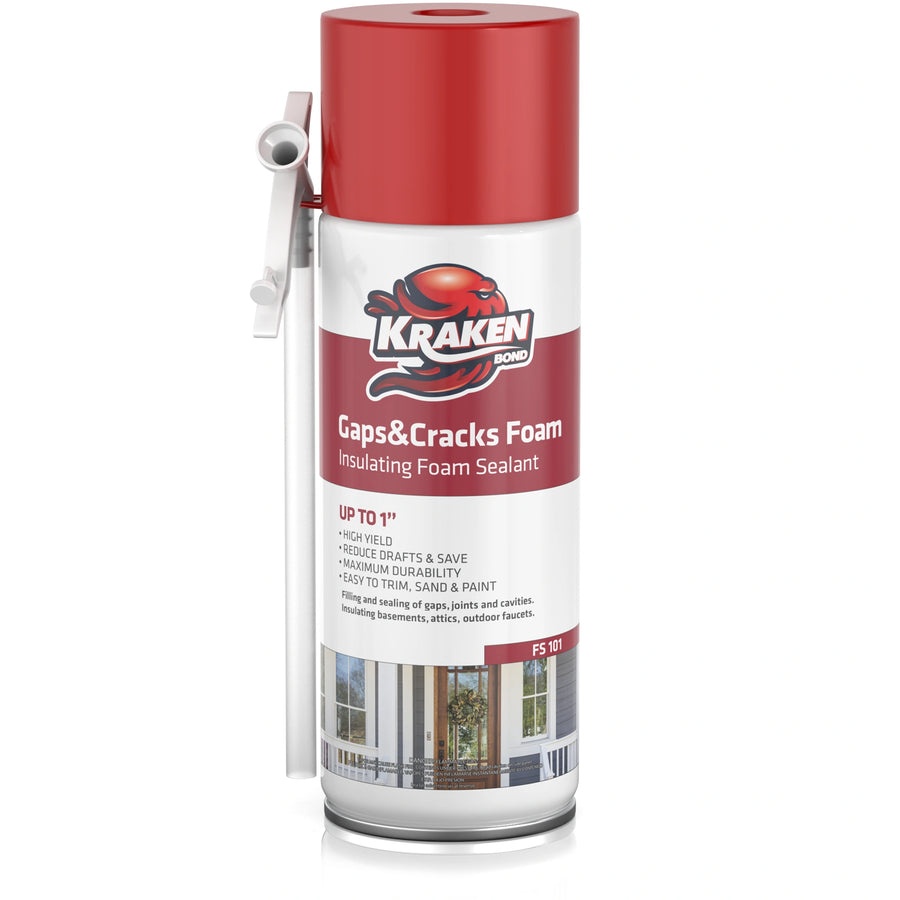
Single-component expanding foam (gap-filling foam from a can) can be used to fill gaps between floorboards, around pipes, and at the perimeter where the floor meets the skirting board. This is an air sealing application, not full insulation. It reduces drafts and cold air infiltration significantly. Use a low-expansion window and door foam for this application — standard expanding foam may crack or lift floorboards if it over-expands.
Insulating Concrete Floors with Spray Foam
Concrete slab floors present different challenges: the insulation cannot go below the slab (it's already there), so options are either above the slab or at the perimeter (slab edge insulation).
|
Method |
Description |
DIY-Friendly |
Cost/sq ft |
Notes |
|
Rigid foam above slab |
2" EPS/XPS foam board + subfloor |
Yes |
$0.50–$1.50 |
Most common; raises floor height ~3" |
|
Spray foam above slab |
1–2" closed-cell + subfloor |
Yes |
$1.00–$2.00 |
Better air seal; slightly less height gain |
|
Slab edge (perimeter) foam |
Spray foam around slab perimeter |
Yes |
$0.50–$1.00 |
Addresses thermal bridging at slab edge |
|
Under-slab (new construction) |
EPS foam before pouring slab |
N/A – new build |
$0.30–$0.80 |
Not a retrofit option |
For existing concrete slab floors, spray foam directly on the slab surface (1.5–2") followed by a plywood or OSB subfloor creates a warm, insulated, DIY-installable floor system. Total floor height increase: approximately 2.5–3.5 inches, depending on subfloor thickness.
R-Value Requirements for Floor Insulation by Climate Zone
The Department of Energy provides R-value recommendations for floor assemblies over unconditioned spaces. Most US homes fall in Zone 3–6:
|
Climate Zone |
States (Examples) |
Floor R-Value Target |
Closed-Cell Depth (R-6/in) |
Open-Cell Depth (R-3.7/in) |
|
Zone 1–2 (Hot) |
FL, HI, southern TX |
R-13 |
2.2 inches |
3.5 inches |
|
Zone 3 (Mixed-Hot) |
AZ, GA, SC, NM |
R-19 to R-25 |
3.2–4.2" |
5.1–6.8" |
|
Zone 4 (Mixed) |
MD, VA, KY, OR |
R-25 to R-30 |
4.2–5.0" |
6.8–8.1" |
|
Zone 5–6 (Cold) |
NY, IL, OH, CO, UT |
R-30 to R-38 |
5.0–6.4" |
8.1–10.3" |
|
Zone 7–8 (Very Cold) |
MN, ND, MT, AK |
R-38 to R-49 |
6.4–8.2" |
10.3–13.2" |
For Australia and the UK, consult your local building code. UK Building Regulations Part L recommend U-values of 0.25 W/m²K for floors, which equates to roughly R-22 (metric RSI 3.9) — achievable with 3.5" of closed-cell foam.
DIY Spray Foam Floor Insulation Cost Guide
Floor insulation cost varies widely by foam type, floor area, and whether you DIY or hire a contractor. Below are 2026 estimates for common DIY floor insulation projects:
|
Project |
Floor Area |
Foam Type |
DIY Material Cost |
Pro Installed Cost |
DIY Savings |
|
Rim joists only |
1,500 sq ft home |
Closed-cell |
$150–$400 |
$500–$1,500 |
~$1,100 |
|
Crawl space joists to R-19 |
800 sq ft |
Closed-cell |
$600–$1,200 |
$2,000–$4,000 |
~$3,000 |
|
Crawl space joists to R-30 |
800 sq ft |
Closed-cell |
$900–$1,800 |
$3,000–$6,000 |
~$4,200 |
|
Between floors (sound) |
600 sq ft |
Open-cell |
$250–$500 |
$800–$2,000 |
~$1,500 |
|
Basement ceiling to R-19 |
1,000 sq ft |
Closed-cell |
$800–$1,600 |
$2,500–$5,000 |
~$3,700 |
|
Slab edge perimeter |
1,500 sq ft home |
Closed-cell |
$150–$300 |
$400–$1,000 |
~$800 |
The federal 25C Energy Efficient Home Improvement Credit covers 30% of insulation material costs (not labor) up to $1,200 per year. For a DIY crawl space project costing $1,200 in materials, this reduces your net cost to approximately $840. Submit using IRS Form 5695.
DIY vs Professional Spray Foam Floor Insulation
Can you spray foam insulate yourself? Yes — for crawl spaces, floor joists, rim joists, and gap sealing, DIY spray foam application is practical and widely done. Consumer-format products handle most residential floor insulation applications without professional equipment.
|
Factor |
DIY Application |
Professional Application |
|
Equipment needed |
Consumer cans or 2-component kits |
Proportioner machine ($10,000+) |
|
Project scale |
Up to ~2,000 sq ft per day |
3,000–8,000 sq ft per day |
|
Product R-value |
R-6/inch (same formulation) |
R-6/inch |
|
Quality control |
Self-monitored depth |
Professional depth measurement |
|
Cleanup / trim |
Utility knife or oscillating tool |
Professional trimming equipment |
|
Code compliance |
Same product standards apply |
Same; may include documentation |
|
Cost |
$1.00–$2.00/board ft material |
$1.50–$3.00/board ft installed |
|
Warranty |
Product warranty only |
Labor + product warranty |
When to hire a professional: crawl spaces under 18" in height (physical access risk); projects requiring more than 1,500 sq ft in a single application session; two-story foam lifts requiring spray foam with fire coating; or when local building permits require licensed contractor sign-off on insulation work.
Best Spray Foam for Floor Insulation: DIY Product Guide
For most DIY floor insulation applications, closed-cell spray foam in consumer can or two-component kit format is the right choice. Here's how to select the right product format:
|
Product Format |
Coverage |
Best For |
Cost per Unit |
Notes |
|
Consumer can (12–27 oz) |
5–25 board ft |
Rim joists, gaps, spot repairs |
$10–$25/can |
Kraken Bond FastCoat — Class A fire-rated |
|
Small 2-component kit (200 bd ft) |
200 board ft |
Partial crawl space, basement rim joists |
$200–$350/kit |
DIY-accessible; no machine needed |
|
Large 2-component kit (600 bd ft) |
600 board ft |
Full crawl space, floor joists |
$400–$700/kit |
Most cost-effective per board foot for DIY |
|
Professional drum system |
3,000+ bd ft |
Large projects |
Rental or contractor |
Best left to contractors for this scale |
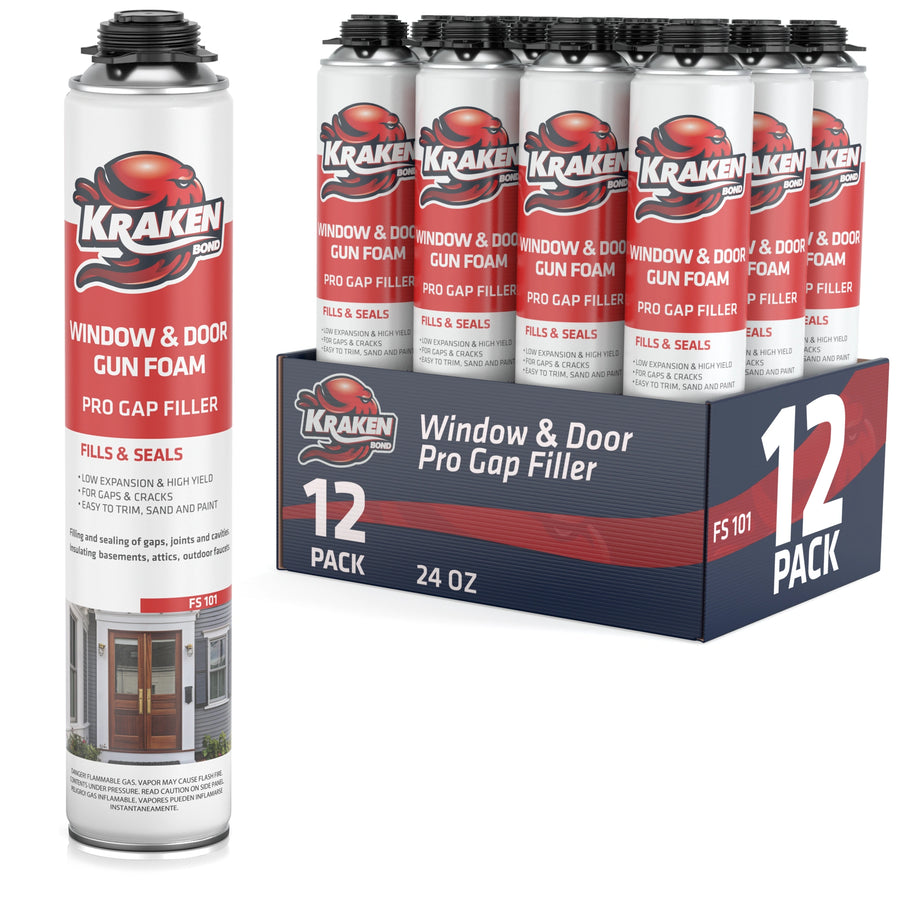
For targeted DIY applications — rim joists, basement sill plates, and gap sealing — Kraken Bond's FastCoat Closed-Cell Spray Foam delivers R-6 per inch with Class A fire rating in a consumer-accessible can format. It's engineered for the high-performance applications where closed-cell foam's moisture resistance and structural properties matter most.
Frequently Asked Questions: Spray Foam Floor Insulation
Can you spray foam insulation under floors yourself (DIY)?
Yes. DIY spray foam under floors is practical for most homeowners with basic tool skills. Consumer two-component kits and cans provide the same closed-cell formulation as professional products at the same R-6/inch performance. The main requirements are: proper PPE (full-face respirator with organic vapor cartridges), adequate crawl space access height (minimum 24"), and following product temperature and ventilation requirements.
How much spray foam do I need for floor joists?
Calculate: floor area (sq ft) × target depth (inches) = board feet needed. For 1,000 sq ft of floor at 3 inches deep (R-19): 3,000 board feet. A standard large two-component kit covers 600–1,000 board feet, so a 1,000 sq ft project requires 3–5 kits. Add 10–15% for waste and overlap. Online coverage calculators on manufacturer websites can provide project-specific estimates.
What is the best insulation for under floors?
For crawl spaces and floor joists, closed-cell spray foam is the best insulation for under floors. It delivers R-6 per inch (the highest available), acts as an air barrier and vapor retarder in a single product, bonds directly to joist faces to prevent sagging, and resists moisture and mold. For between-floor applications above grade, open-cell foam is preferred for its superior sound absorption at lower cost.
Can you spray insulation under floorboards (UK/AU suspended floors)?
Yes. Closed-cell spray foam can be applied to the void beneath suspended wooden floorboards by drilling 20mm access holes per joist bay or by lifting individual floorboards. The critical requirement is maintaining existing void ventilation paths — do not block air bricks or vents unless converting to a fully sealed conditioned void with proper moisture management. Target depth: 2–3 inches for R-12 to R-19.
Is spray foam floor insulation worth it?
Yes, for most homes with accessible crawl spaces or uninsulated floor joists. Studies show spray foam under floors reduces floor-level heating costs by 10–20% and eliminates cold floor drafts. The combination of thermal insulation and air sealing consistently delivers faster payback than thermal insulation alone. Rim joists alone — typically a $200–$400 DIY project — often pay back within the first heating season in cold climates.
Does spray foam under floors cause problems?
Applied correctly, spray foam under floors does not cause problems. Common mistakes that do cause issues: applying foam when wood moisture content exceeds 19% (traps moisture, promotes rot); using open-cell foam on crawl space walls or below-grade surfaces (absorbs moisture); blocking crawl space vents without implementing a proper sealed crawl space moisture management system; applying foam over active pest infestations (foam seals pests in).
How long does spray foam floor insulation last?
Closed-cell spray foam floor insulation lasts the life of the structure when properly applied. It does not settle, compact, or degrade like fiberglass batts (which commonly sag and fall from floor joists within 10–15 years in crawl spaces). The polyurethane polymer is inert and UV-stable when protected from direct sunlight (which does not apply in crawl spaces). Most manufacturers offer 20-year warranties; actual lifespan is effectively unlimited in protected applications.
What R-value do I need for floor insulation?
R-value requirements for floors depend on your DOE climate zone: Zone 1–2 (hot): R-13. Zone 3 (mixed-hot): R-19 to R-25. Zone 4 (mixed): R-25 to R-30. Zone 5–6 (cold): R-30 to R-38. Zone 7–8 (very cold): R-38 to R-49. Use the DOE's climate zone map at energy.gov to identify your zone. For the UK and Australia, local Building Regulations apply — typically equivalent to R-22 to R-30.
Can spray foam be used to level an uneven floor?
No — standard spray foam insulation is not structural and should not be used to level floors. It has compressive strength of 25–50 PSI (closed-cell) but is not designed as a structural leveling material. Purpose-designed polyurethane foam leveling systems (foam jacking or slab lifting services) are different products used for leveling concrete slabs. Insulation spray foam and foam leveling are distinct applications with different formulations.
Should you insulate between floors for sound reduction?
Yes, if airborne and impact sound between floors is a concern. Open-cell spray foam filling joist cavities between stories achieves STC ratings of 37–42, reducing sound transmission by 60–70% compared to an uninsulated floor-ceiling assembly. For best results, combine open-cell foam in joist cavities with resilient channel mounting for the ceiling below and a sound-dampening underlayment for the floor above.
 Back to Spray Foam Insulation Blog

)




Author : Krakenbond Team
Let customers speak for us

Great product, easy to use.
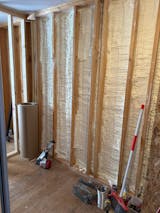
we used it in our new bathroom. Easy to use works well!
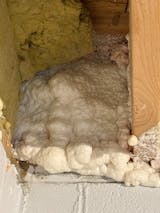
I used the Kraken FastCoat Fire Rated spray foam insulation to seal rim joists in our basement.
The kit ordered came with everything I needed to get started. The spray foam, cleaner, and gun. Application was seamless. Following the directions provided, it foam went on evenly and adhered to not only the wood in the joists, but also the metal ducts present in some of the joist bays.
I was actually pretty impressed with it, which is saying a lot for me. The application I used it for, sealing joist bays to be air tight, worked extremely well. Ordering another case of it to use to air seal my attic.
Used it to insulate crawl space beneath the sun room. Excellent. Easy to use. No mess. Just wish there were more in the bottles.
When remodeling an existing full foam cavity fill project. This product is a geart solution for replacing areas of the existing that had to be removed during the remodel especialy when it isn't cost effective to have a commercial spray foam contractor out for touchup. Make sure to have enough cans to get it done. Touching up a 2' area of a full fill 2x10 floor joist will take about 1½ cans.

Great product! Easy to use and hoping it will last a long time. Great service and delivery experience for me.

Great fast option for repairs
great product
Definitely a learning curve in use, but over all great product.
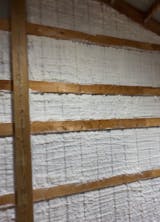
Works great, easy to use and apply. Cans and cleaner very user friendly! tays warmer than previously!
Very easy to use and awesome product. Works very well and no complaints. Used it at home but would def use it at work if the company allowed but they have their own sources.
Easy to apply. Applied a 48 pack to my metal shed in less than an hour.
Great coverage and easy to use!
Was clean installation and delivered as much per ft. as advertised. Im placing another order. Full disclosure, I havent tried other brands, but I was happy. The cleaner works really well as well! I did a 2ft. Swath all the way around the base of my 40x48 shed with 24 cans.
Easy to use, a fraction of the price for professional results, definitely recommend




Leave a comment