



How Thick Does Spray Foam Insulation Need to Be?
Quick Answer: Closed-cell spray foam needs 2–3 inches for walls and 4–5 inches for attics/roofs. Open-cell spray foam needs 3–5 inches for walls and 6–10 inches for attics and ceilings. The exact thickness depends on the R-value you need to achieve, your climate zone, and the application area.
- For R30: Use 4.6 inches of closed-cell foam or 8.1 inches of open-cell foam.
- For R38: Use 5.8 inches of closed-cell foam or 10.3 inches of open-cell foam.

Spray foam insulation thickness is one of the most important decisions you'll make in any insulation project. Go too thin and you'll leave money on the table through energy losses. Go too thick on the wrong foam type and you've wasted material and budget. The right answer always depends on three things: the type of foam (closed-cell or open-cell), the R-value your climate zone requires, and where in the building you're insulating.
In this guide, we walk through exact thickness requirements by R-value, by application, and by climate zone, so you can make a precise, code-compliant decision before you start spraying.
Spray Foam Thickness vs. R-Value: What You Need to Know First
R-value measures thermal resistance. The higher the R-value, the better the insulation performance. With spray foam, the R-value you can achieve per inch depends entirely on the foam type:
|
Foam Type |
R-Value Per Inch |
Notes |
|
Closed-Cell Spray Foam |
R-6.0 to R-6.5 |
Highest per-inch performance; also acts as vapor retarder |
|
Open-Cell Spray Foam |
R-3.5 to R-3.7 |
Lower per-inch; expands more; better for sound dampening |

Because closed-cell foam delivers roughly 75% more R-value per inch than open-cell, it requires significantly less thickness to reach any given R-value target. That's why it's the preferred choice for areas where cavity depth is limited, like 2x4 walls and roof assemblies.
Spray Foam Thickness Chart, By R-Value Target
Use this chart to determine how thick your spray foam needs to be based on the R-value you're targeting. Values use R-6.5/inch for closed-cell and R-3.7/inch for open-cell. For a broader view of insulation types and R-values, including how spray foam compares to batts and blown-in, see our complete insulation guide.
|
R-Value Target |
Closed-Cell Thickness |
Open-Cell Thickness |
Common Application |
|
R-13 |
2.0 inches |
3.5 inches |
Basement walls, garage walls (mild climates) |
|
R-15 |
2.3 inches |
4.1 inches |
2x4 walls, rim joists |
|
R-19 |
2.9 inches |
5.1 inches |
2x6 walls, floors over crawl spaces |
|
R-20 |
3.1 inches |
5.4 inches |
Walls and floors, Climate Zones 3 & 4 |
|
R-21 |
3.2 inches |
5.7 inches |
Exterior walls, cold climates |
|
R-25 |
3.8 inches |
6.8 inches |
Floors and crawl spaces, Zones 4–6 |
|
R-30 |
4.6 inches |
8.1 inches |
Cathedral ceilings, all US zones |
|
R-31 |
4.8 inches |
8.4 inches |
Roof decks, Zones 3–4 |
|
R-38 |
5.8 inches |
10.3 inches |
Attics, Zones 4–6 |
|
R-40 |
6.2 inches |
10.8 inches |
Attics, Zones 5–7 |
|
R-49 |
7.5 inches |
13.2 inches |
Attics, Climate Zones 6–8 |
|
R-60 |
9.2 inches |
16.2 inches |
Extreme cold, Zone 7 & 8 attics |
Spray Foam Thickness by R-Value Target, Detailed Breakdown
How Thick for R-19 Spray Foam Insulation?
R-19 is the standard requirement for exterior walls with 2x6 framing and for floors over unconditioned crawl spaces in many US climate zones. To achieve R-19:
● Closed-cell spray foam: approximately 2.9 inches (round up to 3 inches for safety margin)
● Open-cell spray foam: approximately 5.1 inches (fill the full 5.5-inch cavity in 2x6 framing)
For 2x6 framed walls, closed-cell spray foam is the practical choice here — it achieves R-19 within the available cavity depth while also providing a vapor retarder, which is required in colder climate zones. See our crawl space insulation guide for detailed instructions on applying spray foam to floors and crawl space walls.
How Thick for R-20 Spray Foam Insulation?
R-30 is one of the most commonly required values in the US. It applies to cathedral ceilings in all climate zones, floors over garages in most zones, and many attic assemblies. To achieve R-30:
● Closed-cell spray foam: approximately 3.1 inches
● Open-cell spray foam: approximately 5.4 inches
For cathedral ceilings and roof assemblies where depth is limited, closed-cell spray foam at 4.5 to 5 inches is the standard professional approach. Open-cell at 8 inches works well in deeper assemblies like scissor trusses or thick rafter cavities. For complete guidance on attic applications, see our spray foam attic insulation guide.

How Thick for R-30 Spray Foam Insulation?
R-30 is one of the most commonly required values in the US. It applies to cathedral ceilings in all climate zones, floors over garages in most zones, and many attic assemblies. To achieve R-30:
● Closed-cell spray foam: approximately 4.6 inches (commonly applied as two 2.3-inch passes)
● Open-cell spray foam: approximately 8.1 inches (commonly applied in a single deep pass)
For cathedral ceilings and roof assemblies where depth is limited, closed-cell spray foam at 4.5 to 5 inches is the standard professional approach. Open-cell at 8 inches works well in deeper assemblies like scissor trusses or thick rafter cavities.
How many inches of spray foam for R-30? Use 4.6 inches of closed-cell or 8.1 inches of open-cell.
In a standard roof deck application, two lifts of closed-cell foam at about 2.5 inches each will reliably reach R-30.
How Thick for R-38 Spray Foam Insulation?
R-38 is required for attic insulation in Climate Zones 4 through 6, covering most of the continental United States including the Midwest, Mid-Atlantic, and much of the Pacific Northwest. To achieve R-38:
● Closed-cell spray foam: approximately 5.8 inches
● Open-cell spray foam: approximately 10.3 inches
For attic applications, open-cell spray foam is often the practical choice at R-38. Spraying 10 to 11 inches of open-cell across the attic floor or along rafters is a cost-effective way to reach this target. Closed-cell at 6 inches is preferred for unvented roof decks where moisture control and structural rigidity matter.
How Thick for R-49 Spray Foam Insulation?
R-49 is required for attic insulation in Climate Zones 6, 7, and 8, covering northern states, mountain regions, and Alaska. It's one of the most demanding residential insulation requirements. To achieve R-49:
● Closed-cell spray foam: approximately 7.5 inches (typically applied in three lifts of 2.5 inches each)
● Open-cell spray foam: approximately 13.2 inches
At this R-value, open-cell spray foam applied to attic floors is the most cost-effective option. For unvented roof deck assemblies, a hybrid approach is common: 3 to 4 inches of closed-cell foam directly against the roof deck for vapor control, supplemented by open-cell or batt insulation below to reach R-49 total.
Spray Foam Thickness by Application Area
The R-value target isn't the only thing driving thickness decisions. Each part of the building envelope has its own best practices for spray foam application:
|
Application |
Foam Type |
Min. Thickness |
Recommended Thickness |
Notes |
|
Exterior walls (2x4 framing) |
Closed-cell |
2 inches |
2.5–3 inches |
Achieves R-15 to R-19; adds vapor control |
|
Exterior walls (2x6 framing) |
Closed-cell |
3 inches |
3–3.5 inches |
R-19.5 to R-22; ideal for cold climates |
|
Exterior walls (2x6 framing) |
Open-cell |
5 inches |
5.5 inches (full cavity) |
R-20 approx.; better for mild climates |
|
Cathedral ceilings / roof deck |
Closed-cell |
4.5 inches |
5–6 inches |
R-30 minimum per IECC for most zones |
|
Attic floor (vented attic) |
Open-cell |
8 inches |
10–11 inches |
R-30 to R-38 depending on zone |
|
Unvented attic (hot roof) |
Closed-cell |
5.5 inches |
6–8 inches |
Must meet full R-value without other insulation |
|
Crawl space walls |
Closed-cell |
2 inches |
2–3 inches |
Vapor barrier function critical in crawl spaces |
|
Rim joists & band joists |
Closed-cell |
2 inches |
2–3 inches |
Air sealing as important as R-value here |
|
Basement walls |
Closed-cell |
2 inches |
2.5–3 inches |
Also seals concrete cracks and pores |
|
Metal building walls & roofs |
Closed-cell |
1.5–2 inches |
3 inches |
Condensation control is critical; never use open-cell |
|
Van / RV / tiny house walls |
Closed-cell |
1.5–2 inches |
2–3 inches |
Space limited; closed-cell only viable option |
Is 1 Inch of Spray Foam Enough?
Short answer: It depends on the application. One inch of closed-cell spray foam delivers approximately R-6.5, which is not enough for most whole-wall or attic applications, but is perfectly adequate for specific purposes:
● Rim joist and band joist air sealing 1 inch of closed-cell foam provides an excellent air and vapor barrier for these locations, even if the R-value is modest
● Supplemental layer on top of existing insulation, adding 1 inch over existing batt insulation can close air gaps and add R-value without full replacement
● Metal building vapor barrier application , 1 inch of closed-cell is sometimes used as a condensation control layer before adding other insulation
● Van, RV, or cargo trailer walls, 1 inch in a 1.5-inch cavity provides meaningful insulation and vapor control for mobile structures
Is 1 inch of spray foam enough for a wall?
No, for a stand-alone wall application. You need at least 2–3 inches of closed-cell or 3–5 inches of open-cell to meet code requirements for exterior walls.
Is 1 inch of spray foam enough for a rim joist?
Yes, 1 to 2 inches of closed-cell foam on rim joists is an industry-standard, code-compliant approach for this specific application.
Is 1 inch of closed cell spray foam enough for a metal building?
Generally no. Metal buildings need a minimum of 2 inches for adequate condensation control and thermal performance.
Is 2 Inches of Spray Foam Enough?
Two inches of closed-cell spray foam gives you approximately R-13, which is enough for certain code-compliant applications:
● Interior side of basement walls, R-13 meets minimum requirements in several climate zones
● Crawl space walls, R-13 closed-cell is adequate in Climate Zones 1 through 3
● Garage walls, R-13 meets code minimums in most US climates for attached garages
● Continuous insulation on exterior sheathing (in addition to cavity insulation), 2 inches closed-cell on exterior can bring a wall to R-20+ total
Closed-Cell vs. Open-Cell: Which Needs More Thickness and Why
|
Factor |
Closed-Cell |
Open-Cell |
|
R-value per inch |
R-6.0 to R-6.5 |
R-3.5 to R-3.7 |
|
Thickness for R-30 |
~4.6 inches |
~8.1 inches |
|
Thickness for R-38 |
~5.8 inches |
~10.3 inches |
|
Vapor permeance |
< 1 perm (vapor retarder) |
10+ perms (vapor open) |
|
Best for limited cavities |
Yes, high R/inch means less space |
No, requires more depth |
|
Best for attic floors |
Sometimes |
Yes, cost-effective at depth |
|
Best for metal buildings |
Yes, always use closed-cell |
Never, causes condensation |
|
Best for 2x4 walls |
Yes, achieves R-15+ in 2 inches |
Borderline, R-3.7 x 3.5" = R-13 |
|
Best for sound control |
Moderate |
Excellent, superior acoustic performance |
|
Cost per R-unit |
Higher per sq ft |
Lower at equivalent R-value |
The practical takeaway: closed-cell foam is the right choice when cavity depth is limited, when you need a vapor retarder built into the insulation layer, or when you're working in a moisture-sensitive environment like a metal building, crawl space, or basement. Open-cell foam makes sense for attic floors and interior partition walls where cost efficiency matters more than R-value density.
Spray Foam Thickness by Climate Zone (IECC 2021)
The International Energy Conservation Code (IECC) divides the US into eight climate zones and sets minimum R-value requirements for each. Here's what that means in terms of spray foam thickness:
|
Climate Zone |
States / Regions |
Attic R-Value |
Wall R-Value |
Closed-Cell Attic |
Open-Cell Attic |
|
Zone 1–2 |
FL, HI, S. TX, S. CA |
R-30 to R-38 |
R-13 to R-20 |
4.6–5.8" |
8.1–10.3" |
|
Zone 3 |
Central TX, GA, NC, CA coast |
R-38 |
R-20 |
5.8" |
10.3" |
|
Zone 4 |
Mid-Atlantic, TN, OR, WA coast |
R-38 to R-49 |
R-20 to R-21 |
5.8–7.5" |
10.3–13.2" |
|
Zone 5 |
Midwest, Northern CA, PA, NY |
R-49 |
R-21 |
7.5" |
13.2" |
|
Zone 6 |
MN, WI, NH, ME, mountains |
R-49 |
R-21 |
7.5" |
13.2" |
|
Zone 7–8 |
Northern MN, ND, AK |
R-49 to R-60 |
R-21+ |
7.5–9.2" |
13.2–16.2" |
How Many Lifts Does Spray Foam Need?
Spray foam should not be applied in a single thick pass, most two-component closed-cell spray foam products require multiple lifts to manage heat buildup during the exothermic curing reaction:
● Maximum lift thickness (closed-cell): most products recommend no more than 2 to 2.5 inches per pass
● Minimum wait time between lifts: typically 15 to 30 minutes to allow heat dissipation before applying the next layer
● Example: To reach 5 inches of closed-cell foam, apply in two or three lifts, not one
● Open-cell spray foam can typically be applied in thicker single passes without the same heat risk
Applying closed-cell foam too thick in a single pass can cause the foam to overheat, char internally, and produce a defective layer with reduced R-value and possible fire risk. Always follow your foam manufacturer's application guidelines. The Kraken Bond FastCoat product page includes full application guidance and recommended lift thicknesses.
R-Value of Spray Foam Per Inch, Reference Table
This table shows what R-value you accumulate at each inch of foam thickness, using industry-standard values of R-6.5/inch for closed-cell and R-3.7/inch for open-cell:
|
Inches Applied |
Closed-Cell R-Value |
Open-Cell R-Value |
|
1 inch |
R-6.5 |
R-3.7 |
|
1.5 inches |
R-9.75 |
R-5.6 |
|
2 inches |
R-13.0 |
R-7.4 |
|
2.5 inches |
R-16.3 |
R-9.3 |
|
3 inches |
R-19.5 |
R-11.1 |
|
3.5 inches |
R-22.75 |
R-12.95 |
|
4 inches |
R-26.0 |
R-14.8 |
|
4.5 inches |
R-29.25 |
R-16.65 |
|
5 inches |
R-32.5 |
R-18.5 |
|
6 inches |
R-39.0 |
R-22.2 |
|
7 inches |
R-45.5 |
R-25.9 |
|
8 inches |
R-52.0 |
R-29.6 |
|
9 inches |
R-58.5 |
R-33.3 |
|
10 inches |
R-65.0 |
R-37.0 |
|
11 inches |
R-71.5 |
R-40.7 |
|
13 inches |
R-84.5 |
R-48.1 |
Frequently Asked Questions
How thick should spray foam insulation be for walls?
For exterior walls using closed-cell spray foam, apply 2 to 3 inches (R-13 to R-19.5). For 2x6 framed walls in colder climates, 3 to 3.5 inches is ideal. For open-cell foam in 2x6 framing, filling the entire 5.5-inch cavity gives you approximately R-20.
How thick should spray foam be in an attic?
Attic spray foam thickness depends on whether you're insulating the attic floor (vented attic) or the roof deck (unvented/hot roof). For an attic floor in most US climate zones, 8 to 11 inches of open-cell foam achieves R-30 to R-38. For an unvented roof deck, use 5 to 8 inches of closed-cell spray foam.
Do I need 2 or 3 inches of spray foam?
Use 2 inches of closed-cell foam for rim joists, basement walls, and mild-climate applications where R-13 is adequate. Use 3 inches for exterior walls in 2x6 framing, crawl spaces in cold climates, and any application requiring R-19 to R-20. For attic and ceiling applications, you'll need significantly more than 3 inches with either foam type.
How thick is closed-cell spray foam for R30?
To achieve R-30 with closed-cell spray foam, you need approximately 4.6 inches. In practice, installers typically apply 4.5 to 5 inches in two or three lifts to ensure the target is consistently met across the entire surface.
Can I use open-cell spray foam instead of closed-cell to achieve the same R-value?
Yes, but you'll need significantly more material and depth. To match R-30 from closed-cell (4.6 inches), open-cell foam requires about 8.1 inches. In shallow cavities like 2x4 walls, open-cell cannot achieve code-required R-values. In deep assemblies like attic floors, open-cell is often the more cost-effective choice.
Is spray foam insulation worth it if I can only apply 1–2 inches?
Even a thin layer of spray foam provides valuable air sealing that batts and blown insulation cannot match. In applications like rim joists, crawl space walls, and penetrations around pipes and wires, 1 to 2 inches of closed-cell foam dramatically reduces air infiltration, often delivering more real-world energy savings than a thicker layer of non-air-sealing insulation.
Product Recommendation: Kraken Bond FastCoat Closed-Cell Spray Foam
For DIY and professional applications requiring high-performance closed-cell spray foam, Kraken Bond FastCoat delivers Class A fire-rated insulation with the per-inch R-value performance needed to hit your target thickness efficiently. Whether you're insulating a rim joist, sealing a crawl space, or adding continuous insulation to a metal building, FastCoat is engineered for reliable, code-compliant results.
● Class A fire-rated for use in occupied residential and commercial spaces
● Closed-cell formula delivers approximately R-6 per inch for efficient thickness targeting
● Works in walls, roofs, crawl spaces, basements, metal buildings, and mobile structures
● Available in multiple kit sizes for projects ranging from spot applications to whole-home insulation
● DIY-friendly with detailed application guidelines for proper lift thickness and cure times
 Back to Spray Foam Insulation Blog




Author : Krakenbond Team
Let customers speak for us

WORKED GREAT! I have used larger spray foam systems before, so I have some experience. Followed the instructions and had no issues. Super easy. Just take your time and just lightly pull the trigger and you should have great results. All the equipment and cans worked perfectly and the firm is good quality.
Great product!
Like it
Great product, easy to use.
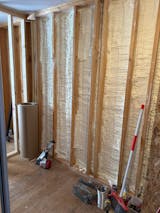
we used it in our new bathroom. Easy to use works well!
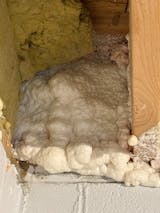
I used the Kraken FastCoat Fire Rated spray foam insulation to seal rim joists in our basement.
The kit ordered came with everything I needed to get started. The spray foam, cleaner, and gun. Application was seamless. Following the directions provided, it foam went on evenly and adhered to not only the wood in the joists, but also the metal ducts present in some of the joist bays.
I was actually pretty impressed with it, which is saying a lot for me. The application I used it for, sealing joist bays to be air tight, worked extremely well. Ordering another case of it to use to air seal my attic.
Used it to insulate crawl space beneath the sun room. Excellent. Easy to use. No mess. Just wish there were more in the bottles.
When remodeling an existing full foam cavity fill project. This product is a geart solution for replacing areas of the existing that had to be removed during the remodel especialy when it isn't cost effective to have a commercial spray foam contractor out for touchup. Make sure to have enough cans to get it done. Touching up a 2' area of a full fill 2x10 floor joist will take about 1½ cans.

Great product! Easy to use and hoping it will last a long time. Great service and delivery experience for me.

Great fast option for repairs
great product
Definitely a learning curve in use, but over all great product.
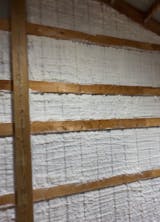
Works great, easy to use and apply. Cans and cleaner very user friendly! tays warmer than previously!
Very easy to use and awesome product. Works very well and no complaints. Used it at home but would def use it at work if the company allowed but they have their own sources.
Easy to apply. Applied a 48 pack to my metal shed in less than an hour.




Leave a comment