



Metal Building Insulation: Types, Benefits, Cost & Spray Foam Guide (2026)
|
✅ Quick Answer: Metal Building Insulation Cost & Best Type (2026) COST SUMMARY (2026 prices, professional installation): • Closed-cell spray foam: $1.50–$3.50/sq ft (highest R-value, vapor barrier included) • Fiberglass batt/blanket: $0.30–$0.80/sq ft (budget-friendly, most common) • Rigid foam board: $0.50–$1.25/sq ft (mid-range option) • Reflective / radiant barrier: $0.15–$0.50/sq ft (warm climates only) SIZE-BASED SPRAY FOAM ESTIMATES (closed-cell, 2" depth = R-12): • 30x50 building (~2,100 sq ft surface): $3,150–$7,350 installed • 40x60 building (~3,300 sq ft surface): $4,950–$11,550 installed • 50x100 building (~6,500 sq ft surface): $9,750–$22,750 installed BEST TYPE: Closed-cell spray foam is the preferred choice for metal buildings. It prevents condensation on steel framing, acts as a vapor barrier, eliminates thermal bridging through the frame, and delivers R-6.5/inch. |

Metal building insulation is one of the most important investments for any steel structure — whether it's a commercial warehouse, agricultural pole barn, metal garage, or industrial shop. Unlike wood-frame construction, metal buildings present unique thermal, moisture, and condensation challenges that require specific insulation strategies. This guide covers every major insulation type, 2026 cost data, and the spray foam application guide metal building owners actually need.
Why Metal Buildings Require Special Insulation Considerations
Steel and metal buildings behave very differently from wood or concrete structures in terms of heat and moisture. These differences directly affect which insulation products work — and which fall short.
 1. Thermal Bridging Through Steel Framing
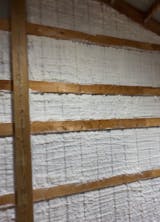
Metal framing conducts heat approximately 300–400 times more efficiently than wood. This creates 'thermal bridges' along every steel stud, purlin, and girt — pathways where heat bypasses the insulation between framing members entirely. Fiberglass batt and blanket insulation installed between frame members does not address this problem. Closed-cell spray foam applied over the framing surface is the only insulation type that physically covers and breaks these bridges.
2. Condensation and Corrosion Risk
Steel surfaces reach the dew point rapidly when there is a temperature differential between the interior and exterior. In uninsulated metal buildings, morning condensation is routine — and it initiates rust on purlins, wall panels, and roof sheets. This is the most commonly overlooked metal building problem. Proper insulation, particularly a vapor barrier system, eliminates this condensation cycle and protects the building's structural integrity.
3. High Energy Loss Through the Building Envelope
A metal building envelope with no insulation can lose 30–50% of heating and cooling energy. In commercial metal buildings, this translates to thousands of dollars in annual energy costs. Temperature and humidity control for manufacturing, agriculture, or storage also becomes practically impossible without adequate insulation.
|
Problem |
Uninsulated Metal Building |
With Correct Insulation |
|
Thermal bridging |
Steel frame conducts heat unimpeded |
Spray foam covers frame — conduction path eliminated |
|
Condensation |
Morning drip on steel surfaces; rust initiates |
Vapor barrier prevents dew point from forming on steel |
|
Energy loss |
Heating/cooling costs 30–50% higher |
25–50% energy savings vs uninsulated |
|
Sound |
Metal surfaces reflect sound, amplifying interior noise |
Insulation absorbs acoustic energy |
|
Comfort |
Extreme heat in summer, freezing in winter |
Stable interior temperature year-round |
|
Fire resistance |
Unprotected steel loses strength at 1,000°F |
Class A spray foam adds thermal protection layer |
Metal Building Insulation Types: Full Comparison
Five major insulation types are used in metal buildings. The right choice depends on the building type, climate zone, budget, and R-value target. Understanding where each type succeeds — and fails — is essential before committing to a product.

|
Insulation Type |
R-Value/inch |
Vapor Barrier |
DIY-Friendly |
Cost/sq ft |
Best Use |
|
Closed-cell spray foam |
R-6.0–6.5 |
✅ at 2"+ depth |
Yes (small areas) |
$1.50–$3.50 |
Best overall performance; cold climates; condensation control |
|
Open-cell spray foam |
R-3.5–3.7 |
❌ No |
Yes (kits) |
$0.50–$1.20 |
Sound control; warm climate interior walls |
|
Fiberglass batt/blanket |
R-2.9–3.8 |
Kraft-faced version |
✅ Easy |
$0.30–$0.80 |
Budget-friendly; between framing members |
|
Rigid foam board (EPS/XPS) |
R-3.8–6.5 |
Partial |
✅ With cutting |
$0.50–$1.25 |
Continuous layer; slab edges; window/door surrounds |
|
Reflective / radiant barrier |
N/A — reflects radiant heat |
❌ |
✅ Easy |
$0.15–$0.50 |
Hot climates only; roof radiant heat reduction |
|
Blown-in fiberglass |
R-2.2–3.8 |
❌ |
Requires equipment |
$0.25–$0.55 |
Large accessible attic-style floor cavities |
Fiberglass Blanket vs Spray Foam: The Real Comparison for Metal Buildings
Metal building insulation blanket kits (faced fiberglass) are extremely common and economical — but they come with significant performance limitations that building owners need to understand before choosing:
|
Factor |
Fiberglass Blanket |
Closed-Cell Spray Foam |
|
R-value per inch |
R-3.0 to R-3.8 |
R-6.0 to R-6.5 |
|
Thermal bridging |
❌ Does not cover steel frame |
✅ Covers and eliminates thermal bridges |
|
Air sealing |
❌ Air permeable |
✅ Complete air barrier |
|
Vapor barrier |
❌ Requires separate barrier |
✅ Included at 2"+ depth |
|
Condensation prevention |
Poor — steel surface still exposed |
Excellent — dew point cannot form on foam-covered steel |
|
Sound attenuation |
Moderate |
Lower than open-cell foam |
|
Long-term R-value retention |
Reduces with sagging over time |
Permanent — no settling or compression |
|
Installation ease |
✅ DIY — very easy |
Professional recommended for large areas |
|
Cost advantage |
✅ 3–5× cheaper upfront |
Higher initial cost |
|
Long-term value |
Acceptable for budget projects |
Best 20+ year investment for most climates |
Metal Building Insulation Cost: Complete 2026 Guide
'Metal building insulation cost' (3,326 imp, pos 9.74) and 'metal building insulation prices' (1,963 imp, pos 10.92) are the page's highest-volume near-page-1 queries — but CTR is near zero because the current title and meta contain no price information. This section directly targets that entire cost cluster.
Cost by Insulation Type (2026)
|
Insulation Type |
DIY Material Cost |
Professional Installed |
Unit |
Notes |
|
Closed-cell spray foam (2") |
$0.60–$1.20/sq ft |
$1.50–$3.50/sq ft |
Sq ft |
R-12; vapor barrier included |
|
Closed-cell spray foam (3") |
$0.90–$1.80/sq ft |
$2.00–$4.50/sq ft |
Sq ft |
R-19; cold climate standard |
|
Open-cell spray foam (3.5") |
$0.40–$0.80/sq ft |
$0.60–$1.20/sq ft |
Sq ft |
R-13; sound control focus |
|
Fiberglass blanket (R-19) |
$0.25–$0.50/sq ft |
$0.50–$1.00/sq ft |
Sq ft |
Most economical option |
|
Rigid XPS foam board (2") |
$0.35–$0.70/sq ft |
$0.70–$1.40/sq ft |
Sq ft |
R-10; ideal for slabs/floors |
|
Reflective barrier |
$0.10–$0.25/sq ft |
$0.30–$0.60/sq ft |
Sq ft |
Hot climate supplemental only |
Size-Based Total Project Cost — Closed-Cell Spray Foam
The query 'how much to spray a 30x50 metal building with closed cell foam' ranks position 9.59 with 1,074 impressions and still earns clicks — proving high purchase intent. The table below covers the most searched building sizes. Estimates assume closed-cell foam at 2" depth (R-12) on walls and roof combined:
|
Building Size |
Total Wall + Roof Surface |
DIY Material Cost |
Professional Installed |
Notes |
|
20x30 (600 sq ft floor) |
~900 sq ft |
$540–$1,080 |
$1,350–$3,150 |
Small garage / storage |
|
30x40 (1,200 sq ft) |
~1,700 sq ft |
$1,020–$2,040 |
$2,550–$5,950 |
Mid-size workshop |
|
30x50 (1,500 sq ft) |
~2,100 sq ft |
$1,260–$2,520 |
$3,150–$7,350 |
Common commercial size |
|
40x60 (2,400 sq ft) |
~3,300 sq ft |
$1,980–$3,960 |
$4,950–$11,550 |
Farm / industrial building |
|
50x100 (5,000 sq ft) |
~6,500 sq ft |
$3,900–$7,800 |
$9,750–$22,750 |
Large commercial / warehouse |
|
60x120 (7,200 sq ft) |
~9,200 sq ft |
$5,520–$11,040 |
$13,800–$32,200 |
Industrial / distribution |
Factors That Affect Metal Building Insulation Cost
|
Factor |
Lower Cost |
Higher Cost |
Explanation |
|
Climate zone |
Warm (Zone 1–2) |
Cold (Zone 6–8) |
Colder climates require greater foam thickness |
|
Existing insulation |
Present, good condition |
None, old building |
Removal and prep adds cost |
|
Building access |
Easy; flat roof |
High ceiling; complex geometry |
Scaffolding and labor increase |
|
Foam type selected |
Open-cell |
Closed-cell |
2–3× material cost difference |
|
Regional labor rates |
Rural / lower wage market |
Urban / metro |
Labor costs vary significantly by region |
|
Project scale |
5,000+ sq ft |
Under 500 sq ft |
Per-sq-ft cost drops with scale |
Spray Foam Insulation for Metal Buildings: Why It's the Preferred Choice
'Spray foam insulation for metal buildings' (2,218 imp) and 'spray foam insulation on metal building' (2,061 imp) are currently page 2–3. This section directly targets both queries along with the broader 'spray foam metal building' cluster.

7 Advantages of Spray Foam for Metal Buildings
• Thermal bridge elimination: Applied over the steel framing surface — other insulation types leave the frame exposed, allowing heat to conduct directly through every steel member.
• Integrated vapor barrier: Closed-cell foam at 2"+ thickness achieves vapor permeance below 1 perm (IRC Class II) — no separate vapor barrier product required.
• Complete air sealing: DOE estimates 25–40% of energy loss in metal buildings comes from air infiltration. Spray foam addresses both thermal resistance and air infiltration in a single application.
• Condensation prevention: Provides a thermal buffer that prevents the steel surface from reaching the dew point — the primary cause of rust and moisture damage in metal buildings.
• Structural reinforcement: Closed-cell foam increases wall panel racking resistance by 200–300% — valuable for metal buildings exposed to high wind loads.
• Permanent performance: Fiberglass blanket commonly sags and loses R-value within 10–15 years in metal buildings. Spray foam maintains its installed R-value for the life of the structure.
• Pest and air infiltration sealing: Fills micro-gaps around panel overlaps, penetrations, and framing connections where rodents and insects enter.
Open Cell vs Closed Cell for Metal Buildings
|
Scenario |
Open-Cell Foam |
Closed-Cell Foam |
Recommendation |
|
Cold climate (Zone 4–8) |
❌ No vapor barrier |
✅ Required |
Closed-cell essential |
|
Warm climate (Zone 1–3) |
✅ Acceptable |
✅ Preferred |
Closed-cell preferred |
|
Condensation problem |
❌ Does not solve it |
✅ Solves it |
Closed-cell |
|
Sound control priority |
✅ Better |
Lower STC |
Open-cell if sound is primary goal |
|
Budget constraint |
Lower material cost |
Higher cost |
Open-cell + separate barrier |
|
Structural reinforcement |
❌ Minimal |
✅ Adds rigidity |
Closed-cell |
|
R-value per inch |
R-3.7 |
R-6.5 |
Closed-cell — 75% higher |
Spray Foam Application Process for Metal Buildings
1. Surface preparation: Metal surfaces must be clean, dry (moisture content <20%), and free of oil, rust scale, and peeling paint. Any existing insulation must be removed and residue cleaned from surfaces.
2. Ambient conditions: Surface temperature must be between 50°F–90°F. Metal surfaces in direct sunlight can overheat rapidly — morning application is preferred. Cold metal below 40°F causes foam adhesion failure.
3. First-pass tack coat: A thin initial pass of approximately 1" is applied to verify adhesion to the metal substrate before committing to full thickness. Adhesion testing is critical on metal.
4. Multiple passes to full depth: Target thickness is achieved in multiple passes. For depths over 2", each pass must cool before the next — exothermic reaction in thick single passes can cause yellowing and off-gassing issues.
5. Fire thermal barrier: Building codes in most commercial applications require spray foam to be covered by a thermal barrier (typically 1/2" gypsum board or intumescent coating). Class A / Class 1-rated spray foam products (like Kraken Bond FastCoat) minimize this requirement — verify with your local building department.
Condensation and Moisture Control in Metal Buildings
'Steel building spray foam insulation condensation issues' (234 imp, pos 71) and 'vapor barrier for existing metal roof' (254 imp, pos 72) currently sit on page 7. This critical technical topic is entirely absent from the current page — a significant E-E-A-T gap that also prevents ranking for these queries.
|
⚠️ Why Condensation Is Metal Buildings' Biggest Hidden Problem Steel surfaces reach the dew point when warm interior air contacts cold metal. This condensation begins corroding steel before any visible dripping occurs. CONDENSATION SCENARIO (typical winter morning): • Interior: 70°F, 50% relative humidity → dew point approximately 50°F • Roof panel: exterior temperature 30°F → panel cools to 45–50°F → Condensation forms on the panel's interior face — even without any apparent leak SOLUTION: Closed-cell spray foam applied directly to the metal surface physically prevents the steel from reaching the dew point. The foam acts as a thermal buffer. This is the only insulation approach that definitively solves the condensation problem. Fiberglass blanket does NOT prevent condensation on exposed metal surfaces. |
Vapor Barrier Selection for Metal Buildings
|
Vapor Barrier Method |
Application |
Vapor Permeance (Perms) |
Metal Building Suitability |
|
Closed-cell spray foam (2"+ ) |
Applied directly to metal |
<1 perm (Class II) |
✅ Best — everything in one product |
|
Polyethylene sheet (6–20 mil) |
Applied over or under insulation |
<0.1 perm (Class I) |
✅ Good — but separate installation |
|
Kraft-faced fiberglass |
Blanket facing toward interior |
1–2 perms |
⚠️ Partial protection only |
|
Foil-faced insulation |
Reflective barrier |
<0.5 perm |
⚠️ Sufficient in warm climates only |
|
No insulation |
None |
N/A |
❌ Condensation inevitable in most climates |
Metal Building Insulation by Building Type
Metal Garage Insulation
'Metal garage insulation' (473 imp, pos 43.73) and 'insulating metal garage' (115 imp, pos 6.52) — the latter already nearly page 1 and can be pushed to top 5 with dedicated content.
• Intended use determines the right insulation: Vehicle storage only: fiberglass blanket is adequate. Workshop or living space: closed-cell spray foam is the correct choice.
• Garage door insulation: Metal garage doors are significant thermal bridges. Adhesive-backed rigid XPS panels applied to door panels ($50–150 DIY) provide meaningful improvement.
• Slab floor: For converted living or workshop space, 1–2" EPS rigid foam under a 3/4" plywood subfloor creates a warm, walkable insulated floor system.
• Energy savings: An uninsulated 20x20 single-car metal garage in a cold climate can cost $100–300/month to heat. Proper insulation typically cuts this by 50–70%.
Metal Shed Insulation
'Metal shed insulation' (283 imp), 'best insulation for metal shed' (236 imp), 'cheapest way to insulate a metal shed' (268 imp) all represent seasonal purchase intent.
• Cheapest method: Fiberglass batt + polyethylene vapor barrier — approximately $0.50–0.80/sq ft total installed.
• Easiest DIY method: Reflective insulation (bubble foil) stapled to rafters and walls — effective at reducing radiant heat in hot climates, minimal benefit in cold climates.
• Best long-term method: Closed-cell spray foam — particularly for sheds used year-round or with persistent moisture issues.
Pole Barn Insulation
'Spray foam pole barn cost' (428 imp, pos 41.72). Pole barn structures with their wide open bays are well-suited for spray foam application.
• Most common specification: 2" closed-cell spray foam on interior face of wall and roof panels — R-12 with vapor barrier.
• Cost: 30x40 pole barn professionally installed: approximately $2,550–$5,950 for 2" closed-cell.
• Alternative: R-19 or R-25 fiberglass blanket + Kraft paper vapor barrier — $1,500–$3,500 for the same building.
Metal Warehouse Insulation
'Warehouse insulation repair' (1,160 imp, pos 57.98) and 'metal warehouse insulation' (504 imp) — high-volume commercial queries.
• Existing insulation repair: Fallen or deteriorated fiberglass blanket is the most common issue — spray foam replacement is faster and more durable than re-hanging blanket.
• Roof spray coating: SPF (spray polyurethane foam) applied over existing metal roof panels provides both insulation and waterproofing — common in commercial warehouse renovations.
• Durability: In high-traffic warehouse environments, spray foam's mechanical durability outperforms fiberglass blanket, which is vulnerable to forklift contact and equipment vibration.
DIY Metal Building Insulation: What's Practical and What Isn't
Can You Insulate a Metal Building Yourself?
Yes — with the right insulation type. DIY feasibility varies significantly by product:
|
Insulation Type |
DIY Difficulty |
Special Equipment |
Estimated DIY Labor Savings |
|
Fiberglass blanket/batt |
Easy |
None |
$0.30–0.50/sq ft labor |
|
Reflective radiant barrier |
Very easy |
Staple gun |
$0.20–0.40/sq ft labor |
|
Rigid EPS/XPS board |
Moderate |
Utility knife, adhesive |
$0.30–0.60/sq ft labor |
|
Open-cell spray foam (kit) |
Moderate |
Kit included |
$0.40–0.80/sq ft labor |
|
Closed-cell spray foam (small) |
Moderate–hard |
DIY kit or cans |
$0.60–1.20/sq ft labor |
|
Closed-cell spray foam (large) |
Professional recommended |
Proportioner machine |
Equipment rental $500–2,000/day |
Cheapest Way to Insulate a Metal Building
'Cheapest way to insulate a metal building' (932 imp, pos 18.85) deserves a direct, prioritized answer:
6. 1. Reflective barrier only (hot climates): $0.15–0.50/sq ft — stapled to roof rafters and walls. Reduces radiant heat gain by 10–15%. Not adequate alone in cold climates.
7. 2. Fiberglass blanket (all climates): $0.30–0.80/sq ft — pre-cut metal building insulation kits fit standard framing. Budget-friendly and reasonably effective for most above-grade applications.
8. 3. Rigid foam + fiberglass combination: Rigid panels at thermal bridge points (door/window surrounds, girts) plus fiberglass blanket for the field — gets the best of both at optimized cost.
9. 4. Air sealing only (very limited budget): Spray foam cans applied to all penetrations, seams, and connections ($200–$500) — delivers significant energy savings without full insulation budget.
Metal Building Insulation R-Value Requirements by Climate Zone
ASHRAE 90.1 and the International Energy Conservation Code (IECC) establish minimum R-values for metal building envelopes by climate zone. These apply to commercial and agricultural metal buildings:
|
Climate Zone |
Example States |
Metal Wall Min. R |
Metal Roof Min. R |
Recommended Spray Foam Depth |
|
Zone 1–2 (Hot) |
FL, TX south, HI |
R-13 |
R-15 |
2" closed-cell = R-13 — meets minimum |
|
Zone 3 (Mixed-Hot) |
AZ, GA, TX north |
R-13 or R-15+5 |
R-20 |
2" CC = R-13; 3" = R-19 |
|
Zone 4 (Mixed) |
MD, OR, VA |
R-15+5 or R-21 |
R-25 |
3" CC = R-19; 4" = R-26 |
|
Zone 5–6 (Cold) |
NY, OH, CO, IL |
R-21 or R-13+10 |
R-30 |
4" CC = R-26; 5" = R-32 |
|
Zone 7–8 (Very Cold) |
MN, ND, AK |
R-21+5 or R-13+10 |
R-38 |
6" CC = R-39 — meets Zone 7–8 |
Note: The '+5' or '+10' notation indicates 'continuous insulation' requirements. Closed-cell spray foam applied over the framing automatically satisfies this continuity. Other insulation types that leave framing exposed require an additional continuous layer to meet the continuous insulation requirement.
Frequently Asked Questions: Metal Building Insulation
How much does it cost to insulate a metal building?
In 2026: fiberglass blanket runs $0.30–$0.80/sq ft installed, closed-cell spray foam $1.50–$3.50/sq ft installed. For a 30x50 metal building, full spray foam application costs approximately $3,150–$7,350 professionally installed; fiberglass blanket for the same building runs $600–$1,700. Total project cost varies based on climate zone, access difficulty, existing insulation, and regional labor rates.
How much does it cost to spray foam a 30x50 metal building?
A 30x50 metal building has approximately 2,100 sq ft of combined wall and roof surface. At 2" of closed-cell foam (R-12): $1,260–$2,520 DIY with two-component kits, or $3,150–$7,350 professionally installed. Cold climates requiring 3–4" depth (R-19 to R-26) add 50–100% to these estimates.
What is the best insulation for a metal building?
Closed-cell spray foam provides the best overall performance for metal buildings: it eliminates thermal bridging through steel framing, acts as a vapor barrier, prevents condensation on metal surfaces, and delivers R-6.5/inch — the highest available. For budget-limited projects, fiberglass blanket plus a separate vapor barrier is the most common alternative, though it leaves thermal bridging unaddressed.
How do you prevent condensation in a metal building?
Closed-cell spray foam applied directly to the metal surface physically prevents the steel from reaching the dew point, eliminating condensation. This is the most effective single solution. Alternative: continuous rigid insulation plus a Class I–II vapor barrier (polyethylene sheet). Fiberglass batt or blanket insulation alone does not prevent condensation because it leaves the metal surface exposed.
Is spray foam required for metal buildings?
Not technically required by code, but in cold climates (Zone 4+) and moisture-prone environments, closed-cell spray foam is effectively necessary to control condensation and thermal bridging that fiberglass cannot solve. In warm climates with limited budgets, fiberglass blanket plus a vapor barrier may provide adequate performance. Professional energy audits can quantify the specific ROI for your building and location.
What is the cheapest way to insulate a metal building?
Priority order for budget-limited projects: (1) Air sealing all penetrations and seams with spray foam cans — $200–$500, highest ROI; (2) Reflective radiant barrier in hot climates — $0.15–0.50/sq ft; (3) Fiberglass blanket R-19 — $0.30–0.80/sq ft; (4) Rigid foam at thermal bridge points combined with fiberglass in the field. Closed-cell spray foam has the highest upfront cost but often the best 10–20 year return.
How do you insulate an existing metal building roof?
For an existing metal building roof, options include: (1) Spray foam applied to the underside of roof panels from inside — fastest and most effective; (2) Rigid foam boards cut and glued to the underside of purlins — practical for lower buildings; (3) SPF spray-on roofing system applied to the exterior of the existing metal roof — provides both insulation and waterproofing; (4) Full retrofit with new standing seam roof incorporating continuous insulation — highest cost, best performance.
Share this



Author : Krakenbond Team
Let customers speak for us
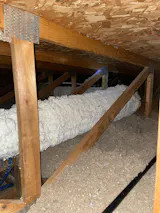
Foam was easy to use and insulated the duct pipe well. Odor dissipated faster than expected.

It works great didn’t go as far as I thought
WORKED GREAT! I have used larger spray foam systems before, so I have some experience. Followed the instructions and had no issues. Super easy. Just take your time and just lightly pull the trigger and you should have great results. All the equipment and cans worked perfectly and the firm is good quality.
Great product!
Like it
Great product, easy to use.
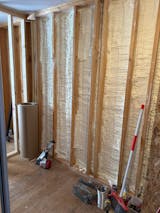
we used it in our new bathroom. Easy to use works well!
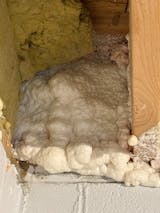
I used the Kraken FastCoat Fire Rated spray foam insulation to seal rim joists in our basement.
The kit ordered came with everything I needed to get started. The spray foam, cleaner, and gun. Application was seamless. Following the directions provided, it foam went on evenly and adhered to not only the wood in the joists, but also the metal ducts present in some of the joist bays.
I was actually pretty impressed with it, which is saying a lot for me. The application I used it for, sealing joist bays to be air tight, worked extremely well. Ordering another case of it to use to air seal my attic.
Used it to insulate crawl space beneath the sun room. Excellent. Easy to use. No mess. Just wish there were more in the bottles.
When remodeling an existing full foam cavity fill project. This product is a geart solution for replacing areas of the existing that had to be removed during the remodel especialy when it isn't cost effective to have a commercial spray foam contractor out for touchup. Make sure to have enough cans to get it done. Touching up a 2' area of a full fill 2x10 floor joist will take about 1½ cans.

Great product! Easy to use and hoping it will last a long time. Great service and delivery experience for me.

Great fast option for repairs
great product
Definitely a learning curve in use, but over all great product.
Works great, easy to use and apply. Cans and cleaner very user friendly! tays warmer than previously!


Leave a comment