



Mold on Insulation: How to Identify, Remove & Prevent It
Finding mold on insulation is more common than most homeowners realize, and more serious than many expect. Whether you've spotted dark patches on fiberglass batts in your basement, discoloration on pink insulation in your attic, or a musty smell coming from your walls, this guide covers everything you need to know: what mold on insulation looks like, which types of insulation are most vulnerable, how dangerous it really is, and exactly what to do about it.

1. Can Mold Grow on Insulation?
Yes, mold can grow on or in most types of insulation, but the insulation material itself is rarely the food source. Mold feeds on dust, dirt, and organic debris that collect on insulation surfaces. The key trigger is always moisture.
Mold requires three things to grow: moisture, a food source, and the right temperature. Insulation on its own may not be organic, fiberglass and mineral wool are inert, but in real-world conditions, insulation accumulates dust, wood particles, drywall dust, and other organic matter that mold can feed on. Add any source of humidity, condensation, or water intrusion, and you have the conditions for a mold problem.
Does insulation mold on its own? Rarely. But does insulation get moldy in practice? Absolutely, especially in basements, attics, and exterior walls where temperature differentials cause condensation.
What Conditions Cause Mold on Insulation?
• High humidity: Relative humidity above 60% creates ideal conditions for mold spore germination.
• Condensation: When warm, moist air meets cold insulation surfaces, moisture condenses, especially in basements and on exterior walls.
• Water leaks: Roof leaks, plumbing leaks, and foundation water intrusion can saturate insulation, creating a persistent mold environment.
• Poor ventilation: Stagnant air in crawl spaces, attics, and wall cavities traps moisture against insulation.
• Improper vapor barriers: Missing or incorrectly installed vapor barriers allow ground moisture to migrate into insulation.
2. What Does Mold on Insulation Look Like?
Visual identification is the first step. Here's how to tell if your insulation has mold, and how to distinguish it from normal discoloration or dirt.

Black Mold on Insulation
Black mold on insulation typically appears as dark gray to jet-black patches or streaks on the insulation surface. It may have a powdery or fuzzy texture. Black mold (commonly Stachybotrys chartarum, though several species appear black) often grows in areas with persistent, heavy moisture, not just a brief dampening. On fiberglass batts, it tends to form in irregular spots. On kraft-faced insulation paper, it follows the seams and edges where moisture collects.
What does black mold on insulation look like?
Black mold on insulation looks like dark gray or black irregular patches, often with a fuzzy or slimy texture. It may cover large areas of the insulation face, especially near wall studs, floor joists, or areas with water stains. A strong musty, earthy odor usually accompanies it.
White Mold on Insulation
White mold on insulation is often mistaken for mineral deposits (efflorescence) or condensation residue. It typically appears as a white, powdery, or fluffy coating on the insulation surface, most commonly on basement insulation or insulation installed in crawl spaces. White mold species common to insulation include Aspergillus, Penicillium, and Cladosporium. Unlike efflorescence, white mold will not dissolve in water and produces a musty odor.
How to tell white mold from mineral deposits: Apply a small drop of water. Efflorescence dissolves; mold does not.
Pink Mold on Insulation
Mold on pink insulation (the standard pink fiberglass batts) often appears as dark streaks, black spots, or, more rarely, pinkish-red discoloration. True pink or reddish mold is typically caused by Serratia marcescens or Fusarium species, and it's less common than black or white mold. More often, discoloration on pink insulation is black mold or dirt staining, which stands out sharply against the light pink fiberglass.
Pink insulation turning black or dark gray?
Dark discoloration on pink fiberglass insulation is almost always black mold, not the insulation changing color. The contrast makes it very visible. Check for moisture sources nearby, this is a reliable early warning sign.
Early Stage Mold on Fiberglass Insulation
Early stage black mold on fiberglass insulation may be subtle: small scattered specks of dark gray or black, a slight musty smell, or visible moisture staining without obvious mold colonies. At this stage, the insulation may still be salvageable if the moisture source is addressed immediately.
Dirt vs. Mold on Insulation, How to Tell the Difference
|
Characteristic |
Dirt / Dust |
Mold |
|
Color |
Gray, brown, or black |
Black, white, green, or pink |
|
Texture |
Uniform, powdery |
Fuzzy, slimy, or powdery with irregular edges |
|
Smell |
Little to no odor |
Musty, earthy, or sour odor |
|
Pattern |
Follows airflow paths; uniform |
Irregular patches; radiates from moisture source |
|
Touch test |
Brushes off cleanly |
May feel slimy or leave staining |
|
Bleach spot test |
No color change |
Color lightens or disappears |
When in doubt, use the bleach spot test: dab a small amount of household bleach on the suspicious area. If the discoloration lightens within 1–2 minutes, it is likely mold. If it stays the same color, it is probably dirt.
3. Is Black Mold on Insulation Dangerous?
Short answer: Yes, mold on insulation is a health risk, especially for vulnerable groups.

Mold releases microscopic spores into the air. When insulation is disturbed, during renovation, HVAC work, or even from air movement, these spores become airborne and can be inhaled. The severity depends on the mold species, the extent of growth, and the health status of the occupants.
Health Effects of Mold Exposure
• Respiratory problems: Coughing, wheezing, shortness of breath, and worsening asthma.
• Allergic reactions: Sneezing, runny nose, eye irritation, and skin rashes.
• Neurological symptoms: Headaches, brain fog, and fatigue, particularly with prolonged Stachybotrys (black mold) exposure.
• Serious illness: Immunocompromised individuals, infants, elderly people, and those with chronic lung disease face higher risks of severe fungal infections.
When to Call a Professional
If any of the following apply, do not attempt DIY mold removal, contact a certified mold remediation specialist:
• The mold-affected insulation area exceeds 10 square feet (roughly 1 square meter).
• Black mold (Stachybotrys chartarum) is suspected, thick, slimy, black growth in areas with chronic water damage.
• Mold is present in an HVAC system or ductwork, which can spread spores throughout the entire building.
• Anyone in the home has respiratory illness, compromised immune function, or is pregnant.
• The mold has penetrated structural elements (joists, studs, sheathing) beneath the insulation.
You notice black and brown mold on floor joists during HVAC installation or renovation? Stop work immediately, seal off the area, and consult a remediation professional. Disturbing established mold colonies without proper containment releases a high concentration of spores.
4. Mold on Fiberglass Insulation, Does Fiberglass Mold?
Does fiberglass insulation mold?
Fiberglass itself does not support mold growth, it is an inorganic material and cannot be used as a food source by mold. However, fiberglass insulation batts accumulate dust and organic debris over time, which CAN feed mold. In humid conditions, fiberglass insulation absolutely develops mold on and within its fiber matrix.
Can mold grow on fiberglass insulation? Yes. While the glass fibers themselves are mold-resistant, the accumulation of organic particles in the fiberglass matrix, combined with moisture, creates ideal conditions. This is especially true for kraft-faced fiberglass batts, the paper facing is organic and molds readily.
Is fiberglass insulation mold resistant? Partially. Unfaced fiberglass performs better than kraft-faced fiberglass, and better than cellulose insulation. But it is not mold-proof. Studies have shown mold growing on fiberglass batts within weeks of exposure to consistent high humidity.
Can fiberglass insulation get moldy in a wall? Yes, especially when there is a vapor drive pushing humid air into the wall cavity. Behind drywall, fiberglass insulation can harbor significant mold growth that is invisible from the room side.
Fiberglass vs. Other Insulation Types, Mold Susceptibility
|
Insulation Type |
Mold Susceptibility |
Notes |
|
Fiberglass batts (kraft-faced) |
Medium-High |
Paper facing molds easily; fibers trap organic matter |
|
Fiberglass batts (unfaced) |
Medium |
Better than kraft-faced; not mold-proof |
|
Cellulose insulation |
High |
Organic material; molds readily when wet |
|
★ Spray foam, closed-cell (BEST) |
Very Low ✓ |
Dense, airtight, zero organic content, highest mold resistance of any insulation type |
|
Spray foam (open-cell) |
Low-Medium |
Can absorb moisture; closed-cell is preferable in moisture-prone areas |
|
Mineral wool / Rockwool |
Low |
Inorganic; good moisture resistance; mold-resistant but not airtight |
|
Rigid foam (EPS/XPS/Polyiso) |
Very Low |
Non-organic; highly mold-resistant; does not air-seal like spray foam |
Best Choice: Closed-Cell Spray Foam Insulation
Closed-cell spray foam ranks at the top among insulation materials in terms of mold resistance. With its airtight structure, zero organic content, and built-in moisture barrier, FastCoat Insulation Spray Foam provides a long-lasting solution, especially for basements, attics, and exterior walls.
Explore the product: FastCoat Insulation Spray Foam
5. Mold on Insulation by Location
Mold on Insulation in the Basement
Mold on insulation in the basement is the most common location for mold problems. Basements are naturally prone to high humidity, condensation on cold surfaces, and water intrusion through foundation walls. Fiberglass batts installed against basement walls often develop mold within the insulation, especially on the side touching the cold concrete.
Prevention in basements: Use closed-cell spray foam or rigid foam directly against the foundation wall (not fiberglass batts). Install a dehumidifier. Ensure adequate drainage and waterproofing on the exterior.
Mold in Attic Insulation
Mold in attic insulation is often caused by inadequate ventilation combined with warm, moist air from the living space rising into the attic. Bathroom exhaust fans vented into the attic (rather than outside) are a leading cause. Roof leaks are another. Mold on attic insulation typically grows on the underside of the roof deck and then spreads to the insulation below.
Signs of mold in attic insulation: Dark staining on the underside of roof sheathing, visible mold colonies on blown-in or batts insulation, musty smell in the living space below, or sudden spike in heating/cooling costs (mold-damaged insulation loses R-value).
Mold in Insulation Behind Drywall
Mold in insulation behind drywall is hidden and often discovered only during renovation or when the problem has become severe. Signs that mold may be behind your walls include: persistent musty smell despite cleaning, discoloration or bubbling of the drywall surface, allergic symptoms that improve when you leave the building, and visible mold around electrical outlets (a gap in the wall where air movement occurs).
Mold behind walls: Do not just paint over it.
If mold is present in insulation behind drywall, the drywall and insulation must be removed, the cavity allowed to dry completely, the mold source addressed, and fresh materials installed. Painting over or sealing in mold does not eliminate it, it continues to grow.
Mold on Insulation Paper (Kraft-Faced Insulation)
Mold on insulation paper (the kraft paper facing on standard fiberglass batts) is one of the most common mold entry points. The paper is organic and highly susceptible to mold when moisture is present. If you see dark staining, black spotting, or a fuzzy coating on the kraft paper facing of your insulation, mold has taken hold. This insulation should be removed and replaced.
6. Mold on Spray Foam Insulation
Spray foam insulation has a reputation as the most mold-resistant option, but it is not completely immune to problems.
Can Mold Grow Under Spray Foam Insulation?
Can mold grow under spray foam? Yes, in specific circumstances. Closed-cell spray foam applied over an existing surface with residual moisture can trap that moisture and create conditions for mold growth between the foam and the substrate. This is why it is critical to ensure surfaces are completely dry before spray foam application.
Can You Spray Foam Over Mold?
No, you should not spray foam over existing mold.
Applying spray foam over mold does not kill it. The mold remains active beneath the foam, continues to degrade organic substrates (wood joists, sheathing), and can eventually compromise structural integrity. The mold must be professionally remediated before any insulation is installed.
Spray Foam Insulation Mold Problems
While spray foam itself is highly mold-resistant, problems occur when:
• Open-cell foam absorbs water: Open-cell spray foam has an open structure that can absorb moisture from leaks or high humidity, eventually supporting mold growth.
• Installation over wet substrates: Any moisture trapped beneath closed-cell foam remains there indefinitely.
Improper coverage leaving gaps: Thin or incomplete spray foam coverage allows air and moisture to pass through, negating the mold-resistance benefit.
7. How to Remove Mold from Insulation
Important: Moldy insulation usually cannot be cleaned, it must be replaced.
Unlike hard surfaces, insulation is porous and cannot be effectively decontaminated once mold has penetrated the material. The EPA and most building science authorities recommend replacing moldy insulation rather than attempting to clean it.

Step-by-Step: How to Remove Moldy Insulation (Small Areas, DIY)
For small affected areas (under 10 sq ft) with non-Stachybotrys mold:
1. Protect yourself: Wear an N95 or P100 respirator, safety goggles, disposable gloves, and disposable coveralls. Do not enter the area without protection.
2. Seal off the area: Close doors and cover vents with plastic sheeting. Turn off HVAC systems to prevent spore spread.
3. Wet the insulation: Lightly mist the moldy insulation with water to prevent spores from becoming airborne during removal.
4. Bag immediately: Place the moldy insulation directly into heavy-duty plastic bags and seal immediately. Do not carry open bags through the living area.
5. Clean the cavity: After removal, scrub the surrounding surfaces (studs, joists, subfloor) with a mold-killing solution (diluted bleach 1:10 with water, or a commercial mold-killing primer). Let dry completely.
6. Fix the moisture source: This is the most critical step. If you do not eliminate the moisture source, mold will return within weeks regardless of how well you cleaned.
7. Allow complete drying: Use fans and dehumidifiers. Ensure all surfaces are fully dry before installing new insulation, this may take 48–72 hours or more.
8. Install new insulation: Replace with a mold-resistant option, closed-cell spray foam is the top recommendation for any area that had a mold problem. It seals the air pathways that caused the original moisture intrusion. See Section 8 for a full comparison.
9. Dispose of materials properly: Seal bags, label as mold-contaminated, and dispose per local regulations.
Make the Right Choice When Replacing Old Insulation
After removing moldy insulation, reinstalling the same material will only repeat the problem. FastCoat Insulation Spray Foam completely fills gaps and blocks moisture-laden air movement, preventing mold from returning.
Explore the product: FastCoat Insulation Spray Foam
Professional Mold Remediation for Insulation
Professional remediation is required for large areas, black mold, HVAC-involved areas, and structural penetration. A certified remediation contractor will:
• Conduct mold testing to identify species and extent
• Establish full containment with negative air pressure
• Remove and properly dispose of all affected materials
• Apply antimicrobial treatments to all exposed surfaces
• Perform post-remediation testing to verify clearance
• Provide documentation for insurance claims
8. Mold-Resistant Insulation Options
If you're replacing moldy insulation or insulating a new moisture-prone area, choosing the right material significantly reduces your long-term mold risk. The table below ranks options from best to worst, closed-cell spray foam leads in every moisture-prone scenario.
|
Insulation Type |
Mold Resistance |
Best For |
|
★ Closed-cell spray foam (BEST) |
Excellent ✓ |
Basement walls, crawl spaces, rim joists, attics, anywhere moisture is a concern |
|
Rigid foam board (XPS/EPS) |
Excellent |
Basement walls, exterior sheathing, good but does not air-seal like spray foam |
|
Mineral wool (Rockwool) |
Very Good |
Wall cavities, attics ,moisture-resistant but allows air movement |
|
Open-cell spray foam |
Good |
Interior walls, sound attenuation, avoid in high-humidity areas |
|
Unfaced fiberglass batts |
Fair |
Interior walls with proper vapor control only |
|
Kraft-faced fiberglass batts |
Poor |
Avoid in basements and humid areas |
|
Cellulose insulation |
Poor |
Avoid in any area with moisture risk |
Experts’ #1 Choice: FastCoat Insulation Spray Foam
The most durable solution against mold risk is closed-cell spray foam. KrakenBond FastCoat can be applied in any moisture-prone area—from basement walls and attics to exterior wall cavities and rim joist areas around the foundation. With a single product, it delivers airtight sealing, moisture control, and mold resistance all in one.
Explore the product: FastCoat Insulation Spray Foam
Best mold-proof insulation for basements: Closed-cell spray foam applied directly to foundation walls is the top recommendation. Unlike rigid foam board, spray foam fills every gap and crack, eliminating the air pathways that bring humid air to cold surfaces. See FastCoat Spray Foam for basement applications.
Mold-resistant insulation for attics: If there is a history of moisture problems, a sealed (unvented) attic assembly with closed-cell spray foam on the underside of the roof deck is the most effective long-term solution. Closed-cell foam eliminates the air movement that carries moisture into attic insulation.
Does polyurethane prevent mold? Yes ,closed-cell polyurethane spray foam is the single most effective mold-prevention insulation choice, combining air sealing, vapor control, and mold resistance in one application. It outperforms every other insulation type in moisture-prone environments.
9. How to Prevent Mold on Insulation
Mold prevention is always more cost-effective than remediation. The following measures, implemented together, dramatically reduce the risk of mold in insulation.
Moisture Control
• Keep indoor relative humidity between 30–50% using dehumidifiers in basements and crawl spaces.
• Ensure all exhaust fans (bathroom, kitchen, dryer) are vented directly to the exterior, never into the attic or crawl space.
• Inspect and maintain roof, gutters, and downspouts annually to prevent water intrusion.
• Address any plumbing leaks immediately, even slow drips saturate insulation over time.
Ventilation
• Maintain adequate attic ventilation (1:150 or 1:300 net free area ratio per building code).
• Do not block soffit vents when adding insulation, this is one of the leading causes of attic mold.
• Ventilate crawl spaces or convert to a conditioned, sealed crawl space with a continuous vapor barrier.
Vapor Barriers and Air Sealing
• Install vapor retarders correctly: In cold climates, the vapor retarder goes on the warm side of the insulation (interior). In hot-humid climates, it goes on the exterior. Incorrect placement causes condensation within the wall assembly, directly on the insulation.
• Air seal before insulating: Every penetration, electrical boxes, plumbing, framing gaps, is a pathway for moist air to reach insulation. Seal with caulk or spray foam before installing batt insulation.
• Choose closed-cell spray foam for double-duty performance: Closed-cell spray foam acts simultaneously as insulation, air barrier, and vapor retarder, eliminating the need for separate vapor barrier installation and removing the possibility of incorrect placement.
The Most Powerful Way to Prevent It: Airtight Spray Foam
Standard board or roll insulation cannot stop moisture that passes through gaps between materials. FastCoat Insulation Spray Foam closed-cell spray foam turns the applied surface into a complete barrier against air and moisture—eliminating the need for a separate vapor barrier.
Explore the product: FastCoat Insulation Spray Foam
Regular Inspection
• Inspect accessible insulation (attic, basement, crawl space) annually and after any water event.
• Treat any musty smell as a warning sign, investigate before it becomes a major remediation project.
• Monitor humidity levels seasonally, especially in transitional months (spring, fall).
10. Frequently Asked Questions About Mold on Insulation
Does insulation mold?
Yes. While inorganic insulation materials (fiberglass, mineral wool) do not directly feed mold, they accumulate dust and organic debris that mold uses as a food source. Add moisture, and mold will grow on virtually any insulation type over time.
Can mold grow on fiberglass insulation?
Yes. Fiberglass insulation can and does grow mold, particularly kraft-faced varieties and in high-humidity environments. The glass fibers themselves are inert, but the accumulated organic particles within the insulation matrix support mold growth.
Is black mold on insulation dangerous?
Yes. Black mold on insulation releases airborne spores that cause respiratory symptoms, allergic reactions, and in severe cases (particularly Stachybotrys chartarum), more serious health effects. Vulnerable individuals, children, elderly, and those with respiratory conditions, are at highest risk.
What does moldy insulation look like?
Moldy insulation typically shows dark gray, black, white, or green patches on the insulation surface. It may appear fuzzy, slimy, or powdery. A musty or earthy odor is a reliable indicator even before visible mold colonies are visible.
How do I remove mold from insulation?
In most cases, moldy insulation cannot be cleaned, it must be removed and replaced. For small areas (under 10 sq ft), follow the DIY removal steps in Section 7. For large areas, black mold, or HVAC involvement, hire a certified mold remediation contractor.
Does spray foam insulation cause mold?
Spray foam itself does not cause mold, closed-cell spray foam is highly mold-resistant. However, applying spray foam over existing mold or over wet substrates traps moisture and can worsen mold problems beneath the foam. Always remediate existing mold before installing spray foam.
Can mold grow on cellulose insulation?
Yes. Cellulose insulation is made from recycled paper and organic materials, making it inherently susceptible to mold. Most cellulose insulation is treated with borate compounds for fire and mold resistance, but this protection diminishes over time, especially when the insulation gets wet.
What is mold-resistant insulation?
Mold-resistant insulation includes closed-cell spray foam, rigid foam board (XPS or EPS), and mineral wool. These materials either lack the organic content that mold feeds on, or resist moisture absorption that enables mold growth. Closed-cell spray foam is the gold standard for mold prevention in moisture-prone areas.
Can insulation mold make you sick?
Yes. Mold spores released from insulation become airborne and can be inhaled. Symptoms range from mild allergic reactions (sneezing, watery eyes) to serious respiratory illness. The severity depends on the mold species, concentration, duration of exposure, and individual health status.
Mold in attic insulation, what should I do?
First, identify and fix the moisture source (roof leak, improperly vented exhaust fan, inadequate ventilation). Then assess the extent: small areas can be DIY-remediated, but most attic mold problems require professional assessment. Replace affected insulation with mold-resistant alternatives and improve attic ventilation.
 Back to Spray Foam Insulation Blog




Author : Krakenbond Team
Let customers speak for us

It works great didn’t go as far as I thought
WORKED GREAT! I have used larger spray foam systems before, so I have some experience. Followed the instructions and had no issues. Super easy. Just take your time and just lightly pull the trigger and you should have great results. All the equipment and cans worked perfectly and the firm is good quality.
Great product!
Like it
Great product, easy to use.
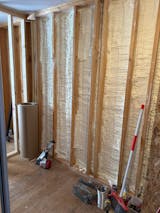
we used it in our new bathroom. Easy to use works well!
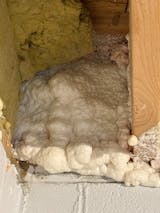
I used the Kraken FastCoat Fire Rated spray foam insulation to seal rim joists in our basement.
The kit ordered came with everything I needed to get started. The spray foam, cleaner, and gun. Application was seamless. Following the directions provided, it foam went on evenly and adhered to not only the wood in the joists, but also the metal ducts present in some of the joist bays.
I was actually pretty impressed with it, which is saying a lot for me. The application I used it for, sealing joist bays to be air tight, worked extremely well. Ordering another case of it to use to air seal my attic.
Used it to insulate crawl space beneath the sun room. Excellent. Easy to use. No mess. Just wish there were more in the bottles.
When remodeling an existing full foam cavity fill project. This product is a geart solution for replacing areas of the existing that had to be removed during the remodel especialy when it isn't cost effective to have a commercial spray foam contractor out for touchup. Make sure to have enough cans to get it done. Touching up a 2' area of a full fill 2x10 floor joist will take about 1½ cans.

Great product! Easy to use and hoping it will last a long time. Great service and delivery experience for me.
Great fast option for repairs
great product
Definitely a learning curve in use, but over all great product.
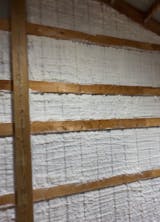
Works great, easy to use and apply. Cans and cleaner very user friendly! tays warmer than previously!
Very easy to use and awesome product. Works very well and no complaints. Used it at home but would def use it at work if the company allowed but they have their own sources.




Leave a comment