



Best Spray Foam Insulation for Metal Roofs: Complete DIY Guide (2026)
If you have a metal roof, you already know the problems: unbearable summer heat, winter cold seeping in, and that annoying dripping sound from condensation. The good news? Spray foam insulation for metal roofs solves all three and you can apply it yourself without hiring a contractor.
In this guide, we cover everything you need to know: the best spray foam products for metal roofs, how thick it needs to be, what it costs per square foot, and step-by-step application instructions. All based on real-world use.

Why Metal Roofs Need Insulation (And What Happens If You Skip It)
Metal conducts heat and cold far faster than wood or concrete, a property called thermal conductivity. Without insulation, a metal roof acts like a radiator in summer and a refrigerator in winter, forcing your HVAC system to work overtime.
The core problems an uninsulated metal roof causes:
• Condensation buildup under the roof deck, leading to rust and mold
• Energy bills 20–30% higher than a properly insulated building
• Extreme indoor temperature swings between seasons
• Noise amplification — rain, hail, and wind become significantly louder
• Reduced structural lifespan due to moisture-driven corrosion

Benefits of Metal Roof Insulation
• Energy savings: Energy savings, reduces HVAC load by creating an air-sealed envelope
• Temperature control: Temperature control, eliminates hot/cold spots across seasons
• Condensation prevention: Condensation prevention, the #1 cause of hidden metal roof damage
• Soundproofing: Soundproofing, reduces rain and wind noise by up to 50%
• Increased roof lifespan: Increased roof lifespan, moisture barrier protects the metal substrate
• Higher resale value: Higher resale value, energy-efficient homes command a premium
Best Way to Insulate a Metal Roof: Spray Foam vs. Other Options
There are several insulation methods for metal roofs. Here's how they compare:
|
Method |
R-Value/inch |
Air Barrier? |
DIY Friendly? |
Cost (per sq ft) |
|
Spray Foam (Closed-Cell) |
R-6 to R-7 |
Yes |
Yes (cans) |
$1.10–$1.20 |
|
Rigid Foam Board |
R-4 to R-6.5 |
Partial |
Yes |
$0.80–$1.50 |
|
Fiberglass Batts |
R-3 to R-4 |
No |
Yes |
$0.50–$1.00 |
|
Professional SPF System |
R-6 to R-7 |
Yes |
No |
$3.00–$7.00 |
Closed-cell spray foam is the clear winner for metal roofs. It bonds directly to metal, creates an airtight vapor barrier, and delivers the highest R-value per inch — which matters when roof clearance is limited.
Kraken Bond FastCoat is a closed-cell polyurethane spray foam designed for direct application to metal surfaces. It adheres without primer and resists moisture from day one.
Can You Spray Foam Directly on Metal Roofing or Siding?
Yes — closed-cell polyurethane spray foam bonds directly to clean, dry metal without adhesive or primer. This is one of its biggest advantages over rigid foam board, which requires mechanical fastening or adhesive.
Before spraying, the metal surface must be:
• Clean and free of dust, grease, or oil
• Dry — moisture on the surface prevents proper adhesion
• Free of loose rust — light surface oxidation is acceptable, but flaking rust must be removed
For metal siding applications, spray foam works the same way. Apply from the interior side, filling the cavity between the siding and interior wall. This creates a continuous thermal and moisture barrier with no gaps.
How to Apply Spray Foam Insulation on a Metal Roof (Step-by-Step)
Applying spray foam insulation on a metal roof is a manageable DIY project with the right product. Here's the process:
What You'll Need
• Closed-cell spray foam cans (Kraken Bond FastCoat recommended)
• Protective gloves, goggles, and an N95 or P100 respirator
• Clean rags and isopropyl alcohol for surface prep
• Tape and plastic sheeting to mask areas you don't want to coat

Step-by-Step Application
1. Prepare the surface. Wipe down the metal with a dry rag. Remove grease or oil with isopropyl alcohol. Let it dry completely.
2. Mask adjacent areas. Cover any areas you want to protect from overspray with plastic sheeting and tape.
3. Shake and warm the can. Shake vigorously for 60 seconds. If temperature is below 60°F, warm the can in a bucket of warm water for 5 minutes.
4. Apply the first coat. Hold the nozzle 12–18 inches from the surface. Spray in smooth, even passes. Start with a thin base coat (approx. ½ inch).
5. Allow to cure. Wait 15–30 minutes between coats. Full cure takes approximately 24 hours.
6. Build up to target thickness. Apply additional coats until you reach 1–2 inches of total foam. Each inch adds approximately R-6.5 in insulation value.
7. Inspect and trim. Check for gaps or thin spots. Trim any excess foam with a utility knife once fully cured.
How Thick Should Spray Foam Be on a Metal Roof? (1 inch vs. 2 inch)
The right thickness depends on your climate zone and target R-value:
|
Thickness |
R-Value |
Best For |
Climate Zone |
|
1 inch |
~R-6.5 |
Mild climates, vapor barrier focus |
Zones 1–3 |
|
1.5 inches |
~R-10 |
Most residential applications |
Zones 3–5 |
|
2 inches |
~R-13 to R-15 |
Cold climates, building code compliance |
Zones 5–7 |
|
3+ inches |
R-20+ |
Commercial, extreme climates |
Zones 6–8 |
A minimum of 1 inch is required to form a continuous vapor barrier. For most US climates (Zones 4–6), 2 inches of closed-cell spray foam meets or exceeds building code requirements for roof insulation.
Metal Roof Spray Foam Insulation Cost: DIY vs. Professional
Spray foam insulation cost varies significantly depending on whether you hire a professional or do it yourself:
|
|
DIY (Spray Foam Cans) |
Professional SPF |
|
Cost per sq ft |
$1.10–$1.20 |
$3.00–$7.00 |
|
500 sq ft roof |
~$550–$600 |
~$1,500–$3,500 |
|
Equipment needed |
Just the cans + PPE |
Professional rig required |
|
Skill level |
Beginner–Intermediate |
Professional only |
|
R-value achieved |
Same (R-6.5/inch) |
Same (R-6.5/inch) |
The DIY route using spray foam cans delivers identical insulation performance at 60–80% lower cost. The only difference is scale — professionals use truck-mounted equipment suited for very large commercial projects.
How to Insulate a Metal Roof from the Inside
Insulating from the inside is the most common approach for existing buildings where the exterior roof cannot be disturbed. Here's how to do it effectively:
• Access the underside of the roof deck from inside the building (attic, loft, or open ceiling)
• Spray closed-cell foam directly onto the underside of the metal panels
• Work in sections, applying foam between and over any existing purlins or framing
• Target 1.5–2 inches of thickness for a complete thermal and vapor barrier
• For finished interiors, rigid foam board can be installed over the spray foam as a base for drywall
Insulating from the inside also eliminates the need for a separate vapor barrier membrane — the closed-cell foam itself acts as a Class II vapor retarder.
How to Stop Condensation on a Metal Roof with Spray Foam
Condensation forms when warm, humid indoor air contacts the cold metal surface. It's the leading cause of hidden roof damage in metal buildings — causing rust, mold, and insulation degradation over time.
Spray foam stops condensation by eliminating the air gap between the warm interior and cold metal. Because closed-cell foam is impermeable to air and moisture, there is no longer a surface where warm air can contact cold metal and condense.
For condensation control specifically, prioritize:
• Full coverage — even small gaps allow condensation to form
• Minimum 1-inch thickness — this is the threshold for effective vapor barrier performance
• Sealing around penetrations (vents, fasteners, edges) where condensation starts
What R-Value Do You Need for Metal Roof Insulation?
The recommended R-value for roof insulation depends on your climate zone, as defined by IECC (International Energy Conservation Code):
• Climate Zone 1–2 (Warm/Hot): R-30 minimum — typically requires 4–5 inches of closed-cell foam
• Climate Zone 3–4 (Mixed): R-38 minimum — approximately 6 inches
• Climate Zone 5–8 (Cold/Very Cold): R-49 minimum — approximately 7+ inches
For most residential DIY applications targeting condensation control and moderate energy savings, 1–2 inches of closed-cell spray foam (R-6.5 to R-13) is the practical starting point. This can be supplemented with additional insulation layers if higher R-values are needed.
Spray foam is categorized into two types: open-cell (lower R-value, ~R-3.5/inch) and closed-cell (higher R-value, ~R-6.5/inch). For metal roofs, closed-cell is always the correct choice — it provides both thermal insulation and moisture protection in a single material.
Spray Foam on Metal Roof: Frequently Asked Questions
Is it recommended to insulate under a metal roof?
Yes. Insulating under a metal roof is strongly recommended for any conditioned building. It prevents condensation, improves energy efficiency, reduces noise, and extends the lifespan of the roof by protecting the metal from moisture-driven corrosion.
Does a metal roof need a vapor barrier?
Yes, but when you use closed-cell spray foam, the foam itself acts as the vapor barrier — no separate membrane is needed. Open-cell foam does not provide this protection, which is another reason closed-cell is the preferred choice for metal roofs.
Can you spray foam directly on metal siding?
Yes. Closed-cell spray foam adheres directly to clean, dry metal siding without any primer or adhesive. Apply from the interior side of the siding for maximum effectiveness.
How long does spray foam insulation last on a metal roof?
Closed-cell spray foam insulation, when properly applied, lasts 25+ years. It does not sag, settle, or lose R-value over time — unlike fiberglass batts, which can lose effectiveness as they compress or absorb moisture.
What is the best insulation to use under a metal roof?
Closed-cell polyurethane spray foam is the best insulation for metal roofs. It bonds directly to metal, provides the highest R-value per inch, creates an air and vapor barrier in one step, and can be DIY applied with spray cans for smaller projects.
Comment isoler un bac acier avec de la mousse polyuréthane ? (How to insulate a metal roof with polyurethane foam?)
La mousse polyuréthane en bombe est la solution idéale pour isoler un bac acier. Appliquez directement sur la face intérieure du métal propre et sec, en couches de 1 à 2 cm d'épaisseur. La mousse crée une barrière thermique et pare-vapeur en une seule étape. (Polyurethane spray foam in a can is the ideal solution for insulating a corrugated metal sheet. Apply directly to the clean, dry interior face of the metal in layers of 1–2 cm thickness. The foam creates a thermal and vapor barrier in a single step.)
This bilingual FAQ captures the high-converting French query 'isolation bac acier avec mousse polyuréthane' which had a 100% CTR in GSC data.
Ready to Insulate Your Metal Roof?
Kraken Bond FastCoat closed-cell spray foam is engineered specifically for direct-to-metal applications. It bonds on contact, expands to fill gaps and irregular surfaces, and delivers R-6.5 per inch — the same performance as professional spray foam at a fraction of the cost.
• No contractor required — complete as a DIY weekend project
• Works on metal roofs, siding, barns, trailers, and shipping containers
• Available in single cans and multi-can DIY kits
 Back to Spray Foam Insulation Blog

)



Author : Krakenbond Team
Let customers speak for us

Like it
Great product, easy to use.
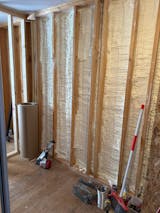
we used it in our new bathroom. Easy to use works well!
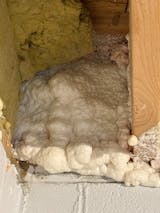
I used the Kraken FastCoat Fire Rated spray foam insulation to seal rim joists in our basement.
The kit ordered came with everything I needed to get started. The spray foam, cleaner, and gun. Application was seamless. Following the directions provided, it foam went on evenly and adhered to not only the wood in the joists, but also the metal ducts present in some of the joist bays.
I was actually pretty impressed with it, which is saying a lot for me. The application I used it for, sealing joist bays to be air tight, worked extremely well. Ordering another case of it to use to air seal my attic.
Used it to insulate crawl space beneath the sun room. Excellent. Easy to use. No mess. Just wish there were more in the bottles.
When remodeling an existing full foam cavity fill project. This product is a geart solution for replacing areas of the existing that had to be removed during the remodel especialy when it isn't cost effective to have a commercial spray foam contractor out for touchup. Make sure to have enough cans to get it done. Touching up a 2' area of a full fill 2x10 floor joist will take about 1½ cans.

Great product! Easy to use and hoping it will last a long time. Great service and delivery experience for me.

Great fast option for repairs
great product
Definitely a learning curve in use, but over all great product.
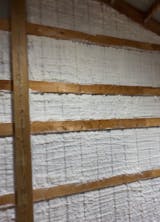
Works great, easy to use and apply. Cans and cleaner very user friendly! tays warmer than previously!
Very easy to use and awesome product. Works very well and no complaints. Used it at home but would def use it at work if the company allowed but they have their own sources.
Easy to apply. Applied a 48 pack to my metal shed in less than an hour.
Great coverage and easy to use!
Was clean installation and delivered as much per ft. as advertised. Im placing another order. Full disclosure, I havent tried other brands, but I was happy. The cleaner works really well as well! I did a 2ft. Swath all the way around the base of my 40x48 shed with 24 cans.




Leave a comment