



Spray Foam Vs. Fiberglass Batt Insulation : Which Gives You More?
Choosing the right insulation for your home is one of the most impactful decisions you can make for your comfort, energy bills, and long-term property value. The spray foam insulation vs. fiberglass debate is one homeowners and contractors return to again and again and for good reason. Both are proven materials, but they perform very differently across the factors that matter most.

This guide breaks down every major category so you can make a fully informed decision. Spoiler: when you look at the complete picture, spray foam insulation consistently delivers superior results.
What is Spray Foam Insulation?
Spray foam insulation is liquid insulation applied insulation that expands 30–60 times its original volume upon application, sealing gaps, holes, and cracks throughout a building envelope. Made by combining isocyanates and polyol resins, it creates a continuous, airtight barrier that no other insulation type can match.

There are two types: closed-cell and open-cell. Closed-cell spray foam offers a higher density and superior R-value per inch, making it the go-to for maximum thermal performance. Open-cell is lighter and works well for interior applications. You can read more in our closed-cell vs. open-cell spray foam guide.
What is Fiberglass Insulation?
Fiberglass insulation comes in pre-cut batts or rolls and is installed between wall studs, floor joists, and rafters. It is made from compressed fine glass fibers that trap air pockets to slow heat transfer. It is a traditional, widely available material that has been used in residential construction for decades.

Head-to-Head Comparison: Spray Foam vs. Fiberglass
Spray foam insulation and fiberglass are common insulation methods used for residential and commercial insulation. The spray foam insulation vs. fiberglass argument compares the different features of both types of insulation. Here's a comparison of both types of insulation:

1. Total Cost of Ownership
Upfront material costs differ between the two: fiberglass batts run around $0.50 per sq ft, while spray foam ranges from $1.50 to $3.50 per sq ft depending on type and thickness. However, insulation cost shouldn't be evaluated in isolation, it must be weighed against energy savings, maintenance, and longevity.
Spray foam's airtight seal dramatically reduces heating and cooling loads, with studies consistently showing energy bill reductions of 30–50% compared to fiberglass-insulated homes. Over a 10–20 year horizon, spray foam's total cost of ownership is typically lower, not higher. Additionally, Kraken Bond's FastCoat makes DIY closed-cell spray foam application accessible, significantly reducing installation costs and closing the price gap from day one.
Winner: Spray Foam when total value is considered.
2. Energy Efficiency
This is where spray foam genuinely dominates. Spray foam creates a continuous air barrier by sealing every gap, crack, and penetration, the leading sources of energy loss in any building.
Fiberglass batts, by contrast, do not air-seal. They sit between studs and leave thermal bridges, gaps, and pathways for air infiltration. Even perfectly installed fiberglass allows significant energy loss that no amount of extra thickness can fully compensate for.
Winner: Spray Foam by a clear margin.
3. R-Value (Thermal Resistance)
R-value measures resistance to heat flow per inch of thickness. Spray foam delivers R-3.5 to R-7 per inch (depending on type), while fiberglass delivers R-2.2 to R-3.5 per inch.
This means spray foam achieves the same thermal resistance in a much thinner profile, critical in wall cavities where space is limited.
Winner: Spray Foam.
4. Installation & Application
Fiberglass batts can be cut and placed by hand, which makes them a familiar material for general contractors. Spray foam, particularly professional-grade closed-cell formulations, is typically applied by a trained installer or with a quality DIY kit.
The key distinction: fiberglass installation is easy, but spray foam installation is precise. With fiberglass, even small miscuts or compression errors create thermal gaps that compromise the entire assembly. Spray foam conforms perfectly to every surface, leaving no gaps by design. Products like FastCoat make DIY spray foam straightforward and our step-by-step home insulation guide walks you through the process.
Winner: Spray Foam : for quality of result. Fiberglass is simpler to apply but more prone to performance gaps.
5. Ease of Application for Hard-to-Reach Areas
Spray foam is applied as a liquid and expands to fill every contour, corner, and irregular cavity, areas where fiberglass simply cannot reach. For rim joists, attic corners, around pipes, and within oddly framed walls, spray foam has no peer.
Winner: Spray Foam.
6. Moisture Resistance
Closed-cell spray foam is inherently moisture-resistant and acts as a Class II vapor retarder. It actively prevents water vapor from penetrating wall assemblies, protecting structural integrity over the long term.
Fiberglass is permeable to moisture and, once wet, loses its insulating value and becomes a substrate for mold growth. It requires separate vapor barriers to manage moisture, adding complexity and potential failure points.
Winner: Spray Foam.
7. Rodent & Pest Resistance
Once cured, closed-cell spray foam is very difficult for rodents to chew through or nest in. Fiberglass batts, on the other hand, are soft and loose, a preferred nesting material for mice and other pests.
Winner: Spray Foam.
8. Mold Resistance
Mold requires three things: moisture, a food source, and a suitable surface. Spray foam's airtight, moisture-resistant properties remove the first condition. It also provides no organic food source for mold.
Fiberglass, when it becomes damp, can harbor mold growth, both on the fibers themselves and on the wall materials it contacts.
Winner: Spray Foam.
9. Soundproofing
Spray foam's air-sealing properties significantly reduce airborne sound transmission. By eliminating air gaps, the primary pathway for sound travel, it creates a noticeably quieter interior environment.
Fiberglass provides some acoustic absorption by trapping sound waves within its fibers, but without air-sealing, sound bypasses it through gaps and penetrations.
Winner: Spray Foam : for overall noise reduction. Both offer some benefit; spray foam's advantage compounds with its air-sealing.
10. Environmental Impact
Spray foam is manufactured from chemicals and has a higher embodied carbon footprint at the point of production compared to fiberglass. This is worth acknowledging honestly.
However, lifecycle environmental impact tells a different story. Spray foam's dramatic reduction in building energy consumption, year after year, for decades, translates into significantly lower greenhouse gas emissions over the life of a building. Most environmental analyses find that spray foam's operational energy savings outweigh its production footprint within just a few years of installation.
Balanced view: Fiberglass has a lower manufacturing impact; spray foam delivers lower long-term environmental impact through energy savings.
11. Fire Safety
Both materials meet standard building code requirements. Spray foam requires a thermal barrier (such as drywall) when left exposed in living spaces, a standard requirement well-documented in building codes. Fiberglass is non-combustible by nature. Neither poses an unusual fire risk when installed per manufacturer guidelines and local codes.
Both: Code-compliant when properly installed.
12. Lifespan & Durability
Spray foam insulation, once cured, maintains its performance characteristics for the life of the building, typically cited at 80+ years. It does not sag, settle, or shift over time.
Fiberglass can last 80–100 years under ideal conditions, but is susceptible to compression, moisture absorption, and settling that degrades its effective R-value over time.
Winner: Spray Foam : for sustained, consistent performance over decades.
13. Air Sealing
This is spray foam's defining advantage. No other insulation material simultaneously insulates and air-seals in a single application. Air leakage accounts for 25–40% of heating and cooling energy loss in typical homes. Spray foam addresses this at the source.
Fiberglass provides zero air-sealing benefit and must be paired with additional air barrier systems to achieve comparable results.
Winner: Spray Foam : unmatched.
14. Indoor Air Quality & Allergen Reduction
Once properly cured, spray foam creates an airtight envelope that keeps outdoor allergens, pollutants, and dust from infiltrating the building. It is hypoallergenic in its cured state.
Fiberglass fibers can trap and harbor allergens within the insulation itself, and the gaps it leaves allow continuous outdoor air infiltration, bringing pollen, dust, and pollutants inside.
Winner: Spray Foam.
Spray foam insulation has several benefits due to its air-sealing ability. It makes your home energy efficient, reduces noise, and prevents mold growth. Therefore, spray foam insulation is a better air-sealing option regarding spray insulation vs. fiberglass comparison.
Spray Foam vs Fiberglass Insulation: Which is Better?
When you stack up the full comparison, the picture is clear. Fiberglass has a lower upfront material cost and is a familiar installation material, but those advantages are limited to the day of installation.
Spray foam outperforms fiberglass in energy efficiency, R-value, air sealing, moisture resistance, mold resistance, pest resistance, soundproofing, indoor air quality, and long-term durability. Its higher upfront cost is offset by energy savings that begin immediately and compound over the life of the building.
For homeowners who want maximum performance, lower energy bills, and a healthier indoor environment, spray foam insulation is the clear choice.
Ready to get started? Explore Kraken Bond's FastCoat closed-cell spray foam, a professional-grade, Class A fire-rated product designed for DIY application. And check out our complete DIY insulation guide to make your project a success.
FAQs
Is Spray Foam Better Than Fiberglass Insulation?
Yes, across the metrics that matter most for real-world performance: R-value per inch, air sealing, moisture resistance, mold resistance, soundproofing, and long-term energy savings. Fiberglass costs less upfront but underperforms on nearly every other measure.
Is Spray Foam Insulation Worth The Extra Upfront Cost?
Absolutely. The energy savings generated by spray foam's airtight seal typically offset the higher installation cost within a few years, then continue delivering savings for the life of the building.
Is Fiberglass Insulation Harmful to Your Health?
Fiberglass fibers can cause skin, eye, and respiratory irritation during installation and can trap allergens within the building envelope over time. Spray foam, once fully cured, is inert and hypoallergenic.
Can You Install Spray Foam Insulation Yourself?
Yes. With Kraken Bond's FastCoat and our step-by-step guide, DIY spray foam installation is straightforward and eliminates most of the professional labor cost typically associated with spray foam.
What is The Rating For Spray Foam vs. Fiberglass Insulation?
Spray foam: R-3.5 to R-7 per inch. Fiberglass batts: R-2.2 to R-3.5 per inch. Spray foam delivers more thermal resistance in less space.
 Back to Spray Foam Insulation Blog



Author : Krakenbond Team
Let customers speak for us

Great product, easy to use.
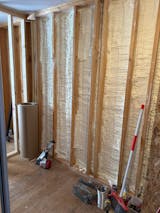
we used it in our new bathroom. Easy to use works well!
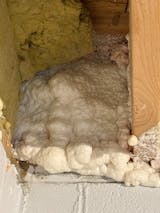
I used the Kraken FastCoat Fire Rated spray foam insulation to seal rim joists in our basement.
The kit ordered came with everything I needed to get started. The spray foam, cleaner, and gun. Application was seamless. Following the directions provided, it foam went on evenly and adhered to not only the wood in the joists, but also the metal ducts present in some of the joist bays.
I was actually pretty impressed with it, which is saying a lot for me. The application I used it for, sealing joist bays to be air tight, worked extremely well. Ordering another case of it to use to air seal my attic.
Used it to insulate crawl space beneath the sun room. Excellent. Easy to use. No mess. Just wish there were more in the bottles.
When remodeling an existing full foam cavity fill project. This product is a geart solution for replacing areas of the existing that had to be removed during the remodel especialy when it isn't cost effective to have a commercial spray foam contractor out for touchup. Make sure to have enough cans to get it done. Touching up a 2' area of a full fill 2x10 floor joist will take about 1½ cans.

Great product! Easy to use and hoping it will last a long time. Great service and delivery experience for me.

Great fast option for repairs
great product
Definitely a learning curve in use, but over all great product.
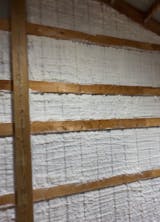
Works great, easy to use and apply. Cans and cleaner very user friendly! tays warmer than previously!
Very easy to use and awesome product. Works very well and no complaints. Used it at home but would def use it at work if the company allowed but they have their own sources.
Easy to apply. Applied a 48 pack to my metal shed in less than an hour.
Great coverage and easy to use!
Was clean installation and delivered as much per ft. as advertised. Im placing another order. Full disclosure, I havent tried other brands, but I was happy. The cleaner works really well as well! I did a 2ft. Swath all the way around the base of my 40x48 shed with 24 cans.
Easy to use, a fraction of the price for professional results, definitely recommend




Leave a comment